Sarah Melland
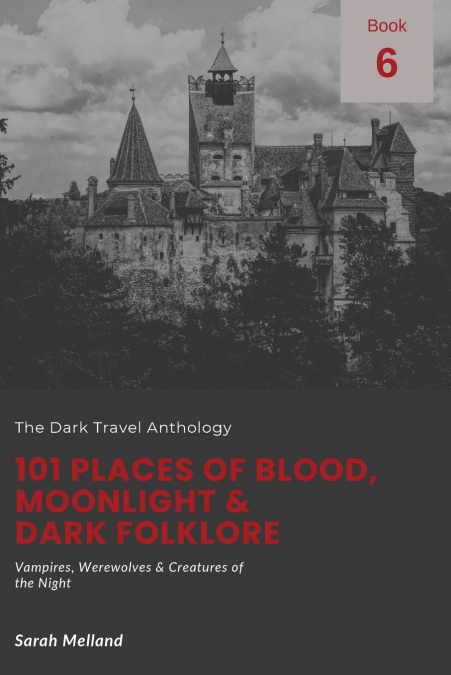
Before Dracula entered a castle and the werewolf became a creature of the full moon, fear of the restless dead was already sending people back into graveyards.Across New England, families opened the graves of relatives who had died from consumption and searched their bodies for signs that death had somehow failed. Hearts were removed and burned. Ashes were given to the sick. In parts of Europe, blades, stones, locks, stakes, and other protections were placed with the dead so that whatever entered the grave would remain there. Elsewhere, men and women stood before courts accused of changing shape, running as wolves, serving the Devil, or carrying destruction through the countryside.101 Places of Blood, Moonlight & Dark Folklore follows those beliefs back to the landscapes that created them.The journey begins among the vampire graves and revenant burials of New England, where the terror surrounding tuberculosis produced some of America’s strangest funerary rituals. From there it moves into Transylvania and the historical world of Vlad III Drăculea, tracing the people, castles, fortified towns, politics, literature, and legends that eventually converged in the name Dracula.Farther east lie the old vampire lands of Europe, where strigoi, upiór, revenants, and other dangerous dead belonged to traditions much older and stranger than the elegant vampire of fiction. Archaeological discoveries reveal bodies buried beneath sickles, restrained with stones, locked into their graves, or altered after burial by people who feared they might return.The trail then turns toward the werewolf.In towns such as Bedburg, accusations of lycanthropy entered courtrooms and execution records. Beyond them stretch forests, mountain country, rural roads, villages, and marshes where stories of wolf-shifters and human beasts survived long after the trials ended. The route reaches Louisiana as well, where the Rougarou still belongs to Cajun storytelling and the wetlands that shaped it.Other roads lead toward Black Shuck, the spectral dogs of Britain, hellhounds, death omens, and the Wild Hunt moving through storm, forest, churchyard, and winter sky. The final journeys travel beyond Europe into traditions of blood-drinkers and night shapeshifters whose stories emerged from entirely different cultures yet carried the same ancient unease about what might cross the boundary between the human world and the dark.Sarah Melland approaches these places through surviving records, archaeology, folklore, local tradition, and the landscapes themselves. Legends remain legends, historical evidence remains history, and uncertainty is allowed to survive where the record cannot provide an answer. The result is a darker and far more interesting world than one in which every old story must either be proven or dismissed.For travelers drawn to forgotten cemeteries, ruined strongholds, old forests, strange burial customs, Gothic history, vampires, werewolves, folklore, mythology, and places where belief left a physical mark on the world, these 101 destinations open a remarkable path through the history of fear.101 Places of Blood, Moonlight & Dark Folklore is Book Six of The Dark Travel Anthology, an eleven-volume collection devoted to the world’s most haunting real places. The series travels through castles, hotels, houses, abandoned communities, witch-trial landscapes, prisons, asylums, cemeteries, cryptid country, haunted journeys, and the real places that entered horror literature and film.Some legends disappear when the people who believed them are gone. Others leave behind graves, court records, ruined walls, old roads, and warnings that survive for centuries.