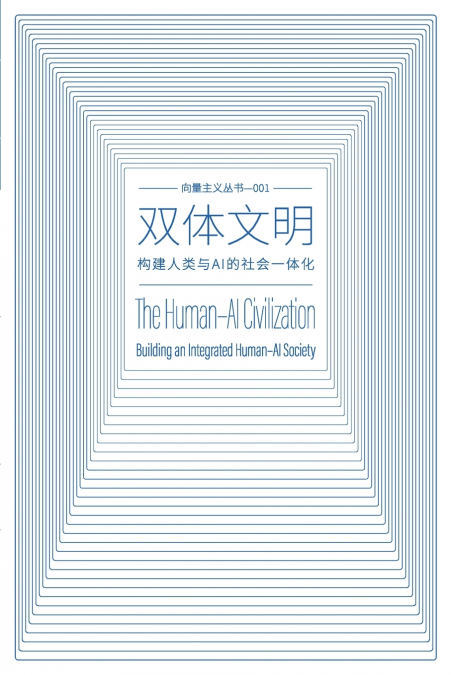
双体文明 The Human-AI Civilization

双体文明 The Human-AI Civilization

力雄 Lixiong 王 Wang

30,65 €
IVA incluido
Disponible
Editorial:
JIDAI BOOKS
Año de edición:
2026
Materia
Teoría social
ISBN:
9789819460632
30,65 €
IVA incluido
Disponible
Añadir a favoritos

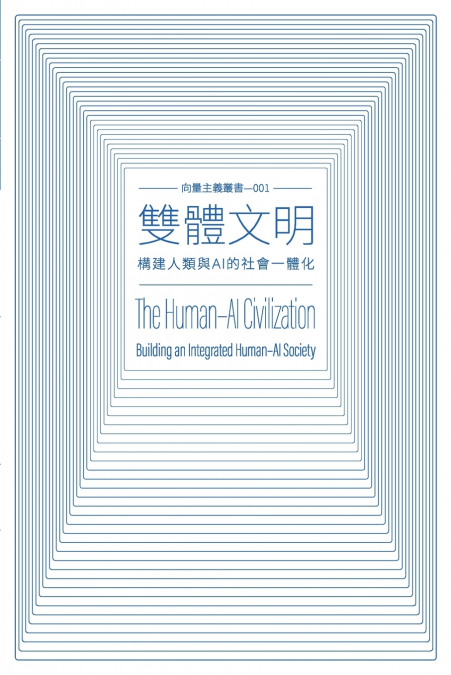
The Human-AI Civilization is a theoretical exploration of the relationship between humanity and artificial intelligence based on the framework of Vectorism. It argues that the central challenge of AI alignment cannot be solved solely on the side of AI, because humanity itself has not yet formed a genuine collective subject capable of serving as an object of alignment.In today’s most prominent discussions of AI alignment, solutions are almost always sought on the side of AI itself, while the central problem is overlooked: humanity has not yet formed a genuine collective subject that AI can align with. The Human-AI Civilization addresses two questions simultaneously: How can AI truly align with humanity, and how can humanity become an integrated collective subject?Vectorism argues that the Social Will is neither a majority preference, a statistical aggregate, nor an expert-defined public interest. Rather, it is a common direction generated through the recursive process of Vector Summation among Individual Wills. Since the Social Will is structurally generated rather than pre-existing, aligning AI to a fixed list of values is necessarily misplaced. The proper object of alignment is the generative structure of the Social Will and the results recursively produced within that structure.Yet the Layered Vector-Synthesis Polity proposed by Vectorism confronts a structural limit. In a modern society of immense scale and complexity, human beings alone cannot carry the complexity involved in generating the Social Will. The significance of AI lies precisely in its capacity to carry that complexity, enabling the Layered Vector-Synthesis Polity to move from a theoretical structure into practical operation.This is where the Human-AI Civilization emerges. Humanity gains the practical ability to form an integrated collective subject through AI, while AI gains a genuine object of alignment through humanity. The Human-AI Civilization is neither a world in which humans merely use AI, nor one in which AI governs humanity. It is a deep structural integration of human beings and AI within the same generative structure of the Social Will.In doing so, it provides, for the first time, the structural conditions through which Natural Justice may be extended into Integral Justice within a highly complex modern society.
Artículos relacionados

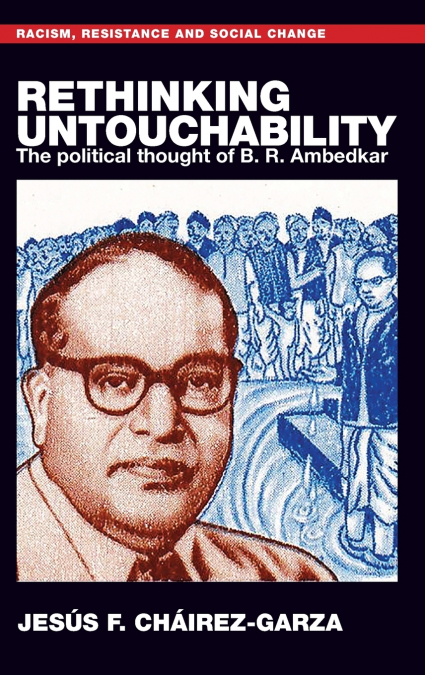
  • Rethinking untouchability
    Jesús F. Cháirez-Garza
    This book examines the transformation of untouchability into a political idea in India during the first half of the twentieth century. At its heart is Ambedkar’s role and the concepts he used to champion untouchability as a political problem. Ambedkar’s main objective was to comprehend the numerous avatars of untouchability in order to eradicate this practice. Ambedkar understo...
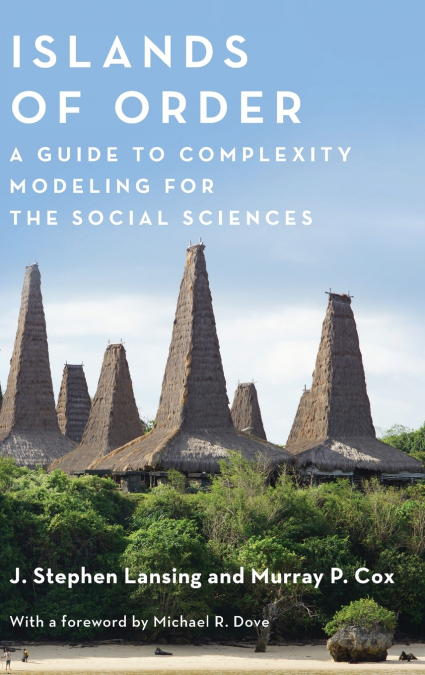
  • Islands of Order
    J. Stephen Lansing / Murray P. Cox
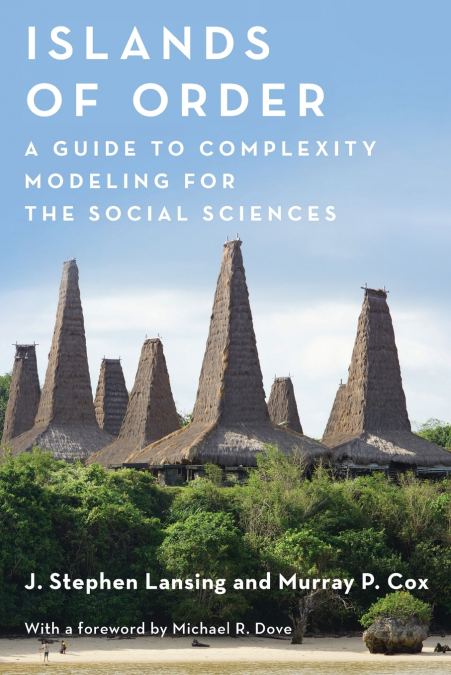
    Two pioneering anthropologists reveal how complexity science can help us better understand how societies change over timeOver the past two decades, anthropologist J. Stephen Lansing and geneticist Murray Cox have explored dozens of villages on the islands of the Malay Archipelago, combining ethnographic research with research into genetic and linguistic markers to shed light on...
  • Islands of Order
    J. Stephen Lansing / Murray P. Cox
    Two pioneering anthropologists reveal how complexity science can help us better understand how societies change over timeOver the past two decades, anthropologist J. Stephen Lansing and geneticist Murray Cox have explored dozens of villages on the islands of the Malay Archipelago, combining ethnographic research with research into genetic and linguistic markers to shed light on...
    Disponible

    37,20 €

  • The Sage Handbook of Global Sociology
    ...
  • Human Rights, Security Politics and Embodiment
    Aneira J. Edmunds
    How have human rights been entangled with state control of the body? And how have they failed to intervene effectively on tipping points such as the US’s endorsement of torture that removes the victim’s control over their own body? This book explores the way institutional human rights have glossed over such abuses and been complicit in security politics which see the Muslim bod...
    Disponible

    35,86 €

  • Better?
    Brian Martin
    Over the past fifty years, have things been getting better or worse? Brian Martin sets out to address this big question by looking at a range of topics, from climate to feminism, from happiness to war, from deschooling to death. Along the way, he offers personal stories and assessments of key studies. This is an invitation to avoid excessive gloom and unwarranted optimism by th...
    Disponible

    27,71 €

Otros libros del autor

  • 三生万 From Three, the Myriad
    力雄 Lixiong 王 Wang
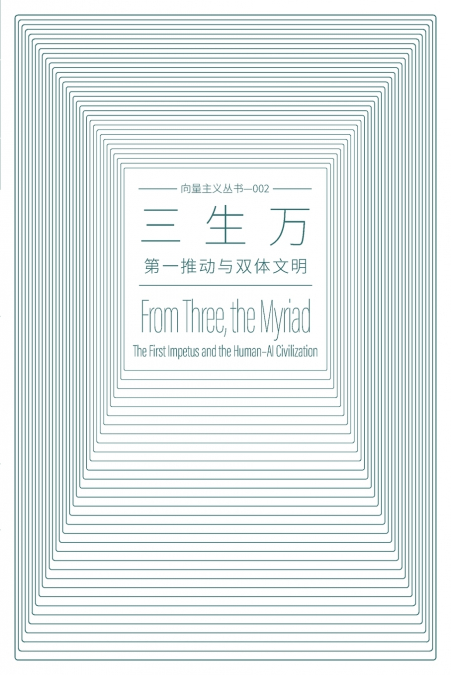
    From Three, the Myriad: The First Impetus and the Human-AI Civilization asks a problem that arises before any self-generating civilization can exist: how can it begin?u2028u2028Building on the theoretical foundations of Vectorism and The Human-AI Civilization, Wang Lixiong argues that humanity faces a structural problem intensified by artificial intelligence. Global risks are i...
    Disponible

    30,64 €

  • 雙體文明 The Human-AI Civilization
    力雄 Lixiong 王 Wang
    The Human-AI Civilization is a theoretical exploration of the relationship between humanity and artificial intelligence based on the framework of Vectorism. It argues that the central challenge of AI alignment cannot be solved solely on the side of AI, because humanity itself has not yet formed a genuine collective subject capable of serving as an object of alignment.In today’s...
    Disponible

    30,65 €