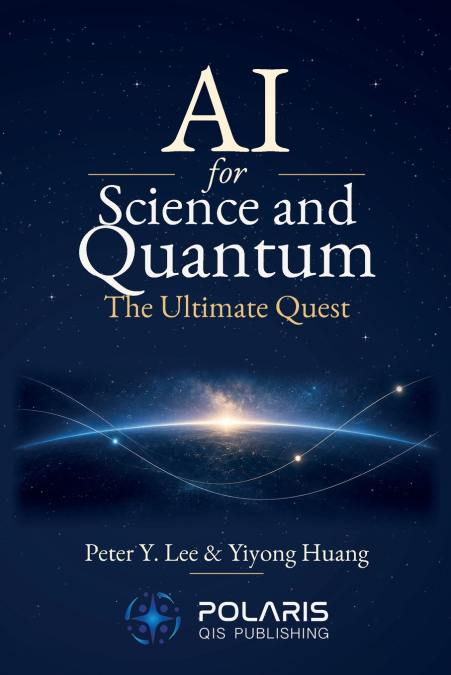
AI for Science and Quantum

AI for Science and Quantum

Peter Y Lee / Yiyong Huang

15,34 €
IVA incluido
Disponible
Editorial:
Polaris QIS Publishing
Año de edición:
2026
Materia
Ciencia: cuestiones generales
ISBN:
9781961880856
15,34 €
IVA incluido
Disponible
Añadir a favoritos

AI Can Propose an Answer. How Do We Ask Nature If It Is Right?AI can write a program in seconds. With suitable tests, it can check the result, revise its approach, and try again. In mathematics, a formal proof can be checked by a computer. Fast, reliable digital verification helps explain AI’s extraordinary progress in these fields.But what happens when the answer is a new medicine, a safer battery, or a material with unfamiliar properties? A convincing explanation is only a beginning. Discovery must confront two fundamental limits.The Physical Limit. Testing a scientific claim often requires contact with the physical or biological world. Samples must be prepared, reactions must proceed, and living systems need time to respond. AI may propose a thousand possibilities while a laboratory can test only a few. Robots and simulators can accelerate parts of this work, but simulations inherit assumptions and gaps in knowledge. Nature must still be consulted.The Quantum Limit. Much of nature operates according to quantum physics, while today’s AI relies mainly on classical computers. A complete classical description of a general quantum state grows exponentially as the system grows. Useful approximations can take us far, but some problems demand a different approach. Quantum devices offer ways to simulate quantum behavior and, for certain tasks, learn directly from quantum information before it becomes an ordinary measurement record.In AI for Science and Quantum: The Ultimate Quest, Peter Y. Lee and and Yiyong Huang explore how classical AI, physical experimentation, and quantum computing might work together to overcome these obstacles. Through accessible explanations and examples-from protein prediction and robotic chemistry to simulated worlds and quantum experiments-the book follows the loop connecting questions, predictions, tests, and new understanding. It asks how AI’s growing reasoning abilities can contribute to science, and what evidence is needed to move from recognizing patterns to understanding causes.Written for curious readers without specialist training, the book examines both demonstrated achievements and the work still ahead. People remain responsible for the questions pursued, the authority delegated to machines, and the uses of discovery. Greater scientific power calls for greater integrity, compassion, and care in sharing its benefits.The ultimate quest is to connect the power to imagine possibilities with the ability to learn from nature-and the wisdom to use what we learn. 
Artículos relacionados

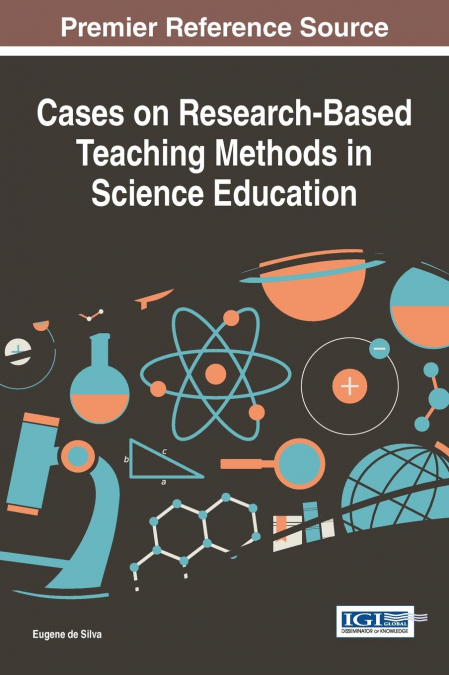
  • Cases on Research-Based Teaching Methods in Science Education
    Eugene de Silva
    While the great scientists of the past recognized a need for a multidisciplinary approach, today’s schools often treat math and science as subjects separate from the rest. This not only creates a disinterest among students, but also a potential learning gap once students reach college and then graduate into the workforce. Cases on Research-Based Teaching Methods in Science Educ...
  • Enhancing Qualitative and Mixed Methods Research with Technology
    Shalin Hai-Jew
    In light of the expensive nature of quantitative research, such as experiments, researchers must seek other methods of understanding the world around them. As such, new qualitative methods are gaining ground in the modern research community. Enhancing Qualitative and Mixed Methods Research with Technology explores the integration of new digital tools into the research process. ...
  • Emerging Research on Bioinspired Materials Engineering
    Mohamed Bououdina
    Bioinspired materials can be defined as the organic or inorganic materials that mimic naturally occurring substances. With applications in a number of fields such as biomedical, chemical, mechanical, and civil engineering, research on the development of biologically-inspired materials is essential to further advancement. Emerging Research on Bioinspired Materials Engineering pr...
  • Contemporary Knowledge and Systems Science
    As branches of research and knowledge continue to expand, platforms for gathering and understanding new information become important aspects of organizational improvement. Contemporary Knowledge and Systems Science provides emerging research on the methods and applications of knowledge systems in social science, economics, and technological developments. While highlighting topi...
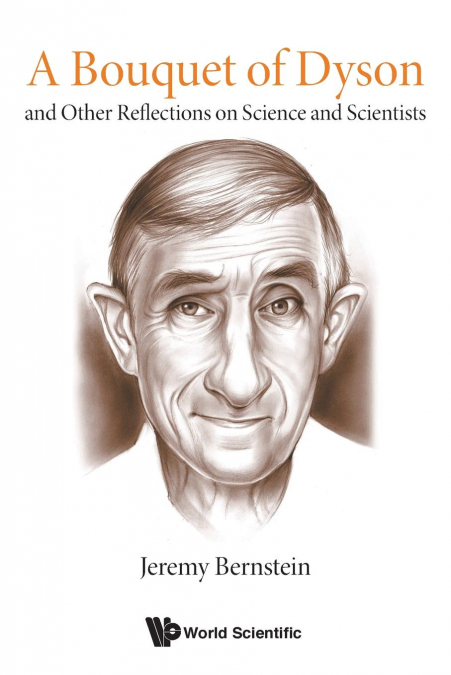
  • BOUQUET OF DYSON, A
    BERNSTEIN JEREMY / Jeremy Bernstein
    University of Texas at Austin My friendship with Freeman Dyson goes back over a half century. My first contact with him goes back to the late 1950s, when I was at the Institute for Advanced Study, and then evolved when I was a consultant at General Atomics in La Jolla, California. Freeman was then trying to design a space ship — the Orion — which would be propelled by atomic bo...
    Disponible

    33,35 €

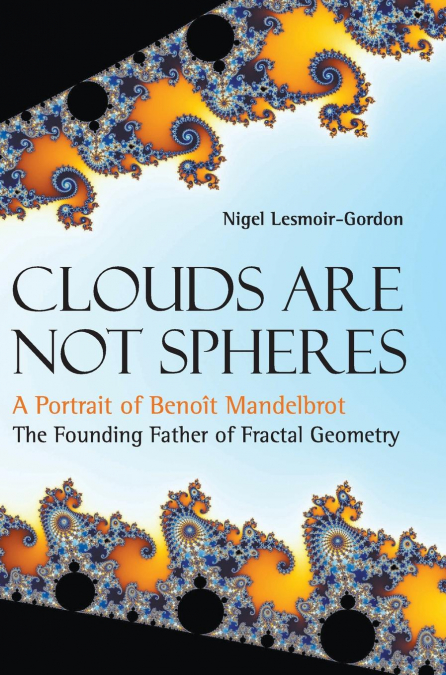
  • CLOUDS ARE NOT SPHERES
    LESMOIR-GORDON NIGEL / NIGEL LESMOIR-GORDON
     The time is right, following Benoît Mandelbrot's death in 2010, to publish this landmark book about the life and work of this maverick math genius.This compact book celebrates the life and achievements of Benoît Mandelbrot with the ideas of fractals presented in a way that can be understood by the interested lay-person. Mathematics is largely avoided. Instead, Mandelbrot&#...