Jerry M. Rosenberg
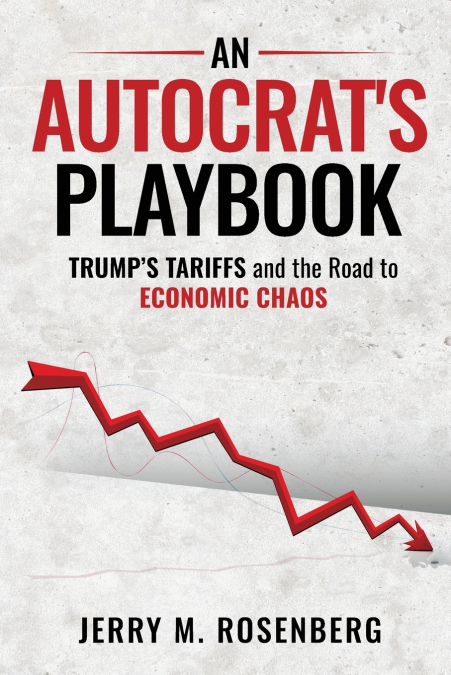
An Autocrat’s Playbook is a politically timed work of political-economic nonfiction that frames Trump-era tariff escalation as a case study in economic nationalism - arguing it can destabilize U.S. growth, strain alliances, and accelerate global realignment. It’s written as an authoritative, historically grounded policy warning (more analysis than partisan polemic), with a documentary, headline-driven chronology that culminates in the legal fight over tariff authority.Tariffs are taxes. The question that reached the Supreme Court was who holds the power to impose them.In January 2025, Donald Trump returned to office promising that tariffs would make America rich. Within months he had declared a national economic emergency, unveiled a 'Liberation Day' tariff chart in the Rose Garden, and claimed authority under a 1977 emergency-powers statute that never mentions tariffs at all. What followed was a year of whiplash: escalating duties and abrupt reversals, retaliation from allies and adversaries alike, rising prices, slowed hiring, small businesses pushed to the edge, and a global economy forced to plan around one man’s improvisations.An Autocrat’s Playbook is the full chronicle of that year and of the constitutional collision it produced. Jerry M. Rosenberg tracks the policy as it happened, from the first hundred days through the market shocks that followed, across the national impact on small business, consumers, and employment, and the global impact on Europe, China, Canada, Mexico, and the trading order the United States spent eighty years building. The account culminates in the case that reached the Supreme Court, the six-to-three ruling that struck the tariffs down, the scramble over more than $100 billion in refunds, and the new levies that appeared the very next day.What separates this book from the flood of Trump-era commentary is its long memory. Rosenberg has chronicled economic crises for six decades, and he situates this moment inside a century of them: the Smoot-Hawley Tariff Act of 1930 and the trade collapse it accelerated, the Great Recession of 2007-2010, the COVID-19 shock, and the recurring temptation to answer economic anxiety with protectionism. The argument is built from the documentary record: headlines, testimony, court filings, and data from the OECD, the Peterson Institute, Brookings, the Council on Foreign Relations, and the Budget Lab at Yale. Readers are given the evidence and the history, and trusted to judge.Jerry M. Rosenberg is Emeritus Professor of International Business at Rutgers University and the author of more than thirty books, including two on global recessions, with translations into Japanese, Russian, Chinese, Spanish, and Czech/Slovak. The New York Times has called him 'arguably the leading business and technical lexicographer in the nation.' He has testified before the U.S. Senate’s Constitutional Rights Subcommittee and holds three Fulbright Awards.Essential reading for anyone who wants to understand what tariffs actually cost, who really pays them, and what happens to a constitutional democracy when the power to tax migrates to the executive branch.