Julia Wolbrook
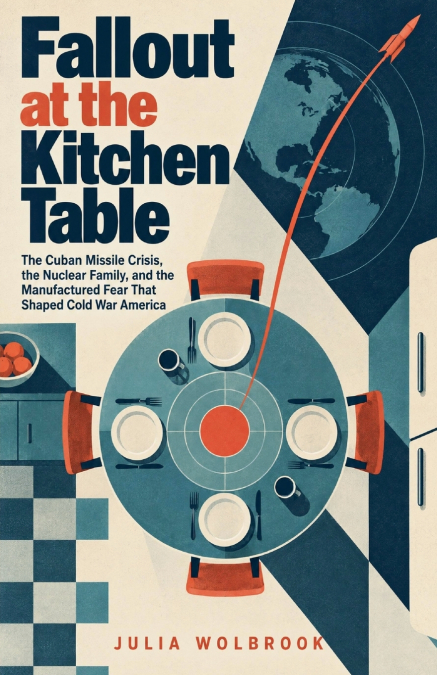
Thirteen days. One president. A hundred and eighty million people waiting for the sky to fall.In October 1962, the world came closer to nuclear war than it ever had before or since. The story has been told a hundred times: the generals, the ultimatums, the tense hours in the Situation Room. But another story unfolded in living rooms, school gymnasiums, and basement shelters across America.Fallout at the Kitchen Table is the untold history of the families who lived through the brink.It is the story of a nation that was told what to fear, how to feel, and who to be. Newspapers ran mushroom clouds beside department-store ads. Comic books turned radiation into superpowers and communism into a monster under the bed. A turtle in a cartoon taught schoolchildren how to survive an atomic blast, while the narrator quietly admitted the bomb might come without warning. Fathers were told to be protectors, mothers were told to stock the pantry, and children drew pictures of their own deaths.Part social history, part psychological portrait, part reckoning with how memory is made, Fallout at the Kitchen Table asks a question that echoes far beyond 1962: when a government, a press, and a culture decide what you should fear, whose story are you really living in?The missiles were ninety miles from Florida. The fear was already inside the house.