Julian Smith
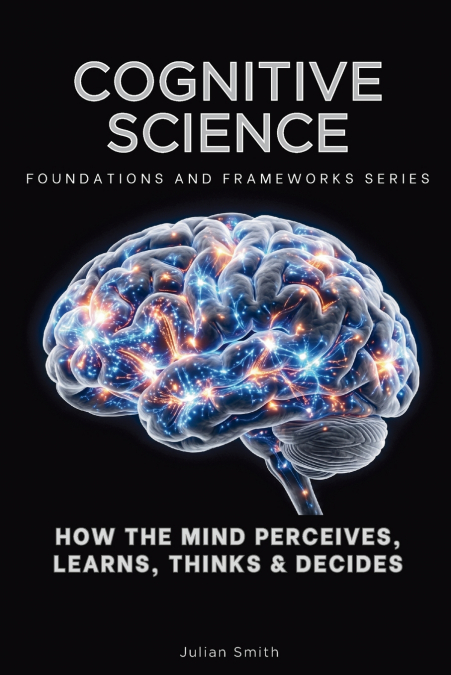
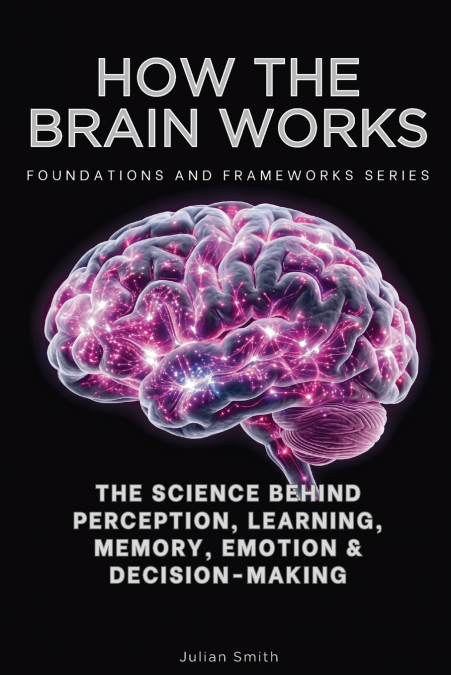
Your brain weighs three pounds, runs on about 20 watts, and builds everything you see, remember, and decide. It takes up 2 percent of your body weight and burns roughly 20 percent of your energy, even while you sleep. This book explains how it does all that, in plain language, with no biology background needed and no wall of jargon to climb. Ten chapters start with the physical machine and end with what it produces. The order is deliberate: anatomy and single cells first, then perception, attention, learning, memory, emotion, and decision-making, and it closes with how the organ changes from before birth into old age. When a technical term earns its place, it gets explained in ordinary words first and named second, so the vocabulary sticks because it means something rather than because you memorized it. The chapters cover: - The cortex, its four lobes, and the older structures underneath: thalamus, hypothalamus, basal ganglia, hippocampus, and amygdala - Neurons, action potentials, myelin, and the synapse chemistry behind mood, movement, and reward - How researchers learn any of this: lesion cases, split-brain patients, EEG, fMRI, and PET - Why color does not exist outside your head, and why the flat, upside-down image on your retina still becomes a solid room - Sleep stages, circadian rhythms, dreaming, and the default mode network that keeps running while your mind wanders - Neuroplasticity, prediction error, and long-term potentiation, along with the study methods that follow from them: spaced practice, self-testing, and sleeping on what you learned - Working memory limits, consolidation, and the reconstructive process that produces confident false memories - Threat detection, the HPA axis, chronic stress, and why craving and enjoyment run on separate circuits - Loss aversion, delay discounting, and the mental shortcuts that lead careful people into bad bets - Adolescent remodeling, cognitive reserve, dementia, rehabilitation, and brain-computer interfaces Written for: - Students starting a psychology or neuroscience course - Teachers and tutors who need explanations they can hand on - Caregivers facing stroke recovery or memory loss, and - Anyone who wants to read a science headline and judge it for themselves Each chapter closes with a discussion question, and sample responses sit at the back for comparison. A timeline traces four thousand years of discovery, opening with the Edwin Smith Papyrus and ending with implants that read neural signals directly. A glossary defines every term in plain words, and a short reading list points to where to go next, including Oliver Sacks and the standard Kandel reference. Popular myths get corrected as they come up. You don’t use only 10 percent of your brain. No healthy person runs on one hemisphere. What you get instead is a connected picture of the organ doing the reading right now, detailed enough to answer real questions, plain enough to repeat to someone else, and grounded in the same evidence neuroscientists use, minus the vocabulary barrier.