Dr. Ali Mohamed Salah
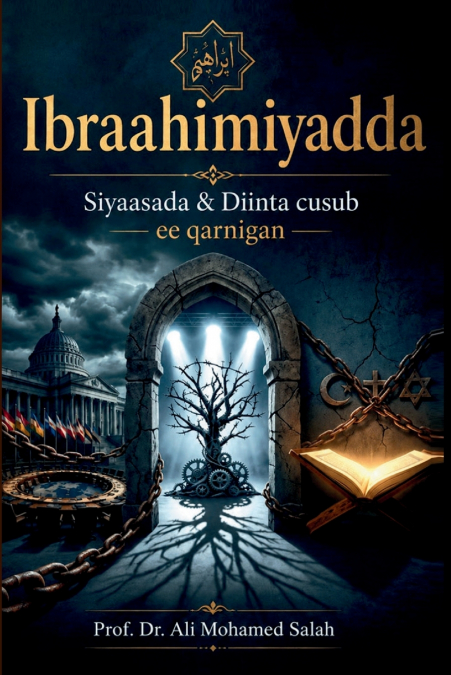
Buuggan Ibraahiimiyadda: Siyaasadda iyo Diinta Cusub ee Qarnigan wuxuu si qoto dheer u falanqeynayaa waxa maanta loo yaqaan 'Ibraahiimiyadda' iyo sida loogu adeegsanayo mashruuc diimeed oo cusub iyo mid siyaasadeedba. Wuxuu iftiiminayaa xiriirka ka dhexeeya wada-hadallada diimaha iyo heshiisyada siyaasadeed. Buuggu wuxuu sidoo kale daaha ka rogayaa ujeeddooyinka ka dambeeya heshiisyada loo yaqaan Abrahamic Accords, kuwaas oo asal ahaan loogu talagalay in si gardarro ah gacanta loogu galiyo Yuhuudda dhulka Falastiin iyo muqaddasaadka Muslimiinta.ENGLISH:Ibraahimiyadda: Siyaasada & Diinta Cusub ee Qarnigan - Abrahamism: The Politics and the New Religion of This Century - is the second edition of a landmark critical study that has established itself as the definitive Somali-language scholarly response to one of the most widely debated and politically consequential ideas of our time.The book offers an in-depth critical analysis of the concept and project known as Abrahamism: an idea presented to the world as a framework of coexistence, mutual understanding, peace, and rapprochement among Judaism, Christianity, and Islam. This study examines the deeper foundations upon which that idea rests, the long-term objectives it carries, and the institutional, diplomatic, and political machinery through which it has moved from interfaith rhetoric into the heart of geopolitical strategy in the Muslim world - particularly in the Middle East.Five substantive chapters trace the origins of Abrahamism, the theological figure of the Prophet Ibrahim upon which it is constructed, the stages of its development from interreligious dialogue into the Abraham Accords and their associated institutions, and its direct bearing on the Palestinian cause - specifically the rights of the Palestinian people, the status of Bayt al-Maqdis, and the integrity of Al-Aqsa Mosque. The book documents the network of organisations and initiatives - the Shalom Hartman Institute, the World Jewish Congress, the Abraham Fund, and Israeli state-backed structures - through which the Abraham Accords framework operates.At the heart of the study is a doctrinal and theological critique: that attempts to unite the Abrahamic faiths under a shared religious identity risk the dilution of Islamic doctrinal distinctions, the erosion of Muslim identity, and the normalisation of religious frameworks that blur the boundaries between Islam and other traditions. The book insists on distinguishing between peaceful coexistence among the followers of different faiths - which Islam commands - and the merging of religions or the erasure of doctrinal boundaries, which Islam prohibits.The book concludes with a scholarly warning directed especially at Muslim scholars, intellectuals, youth, and those engaged in social and educational work: to approach Abrahamism with conscious, critical reflection, weighing its apparent and hidden objectives and its potential impact on the future of Islamic identity, the unity of the Muslim Ummah, and the Palestinian cause.An essential resource for students and scholars of Islamic theology, comparative religion, and Middle Eastern political history; for imams, Muslim community leaders, and educators working in diasporic and Western contexts; and for all readers seeking a rigorous, Islamically grounded analysis of one of the most controversial religious and political ideas of this century.