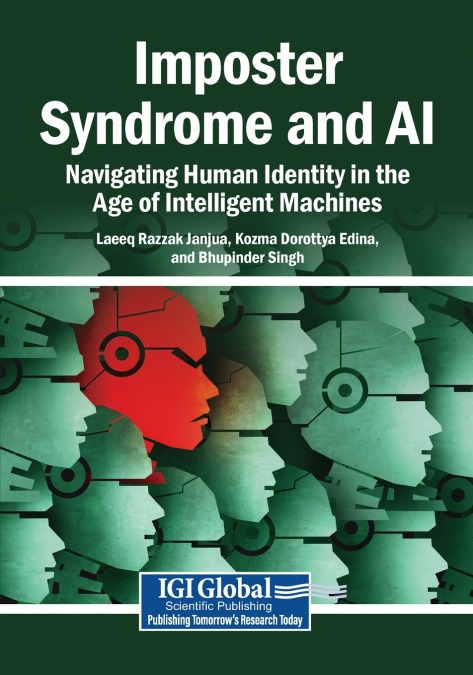
With the rapid advancements in artificial intelligence (AI), the boundaries between human capability and machine intelligence are increasingly blurred. As AI demonstrates creativity and problem-solving mimicry once thought to be uniquely human, many individuals find themselves questioning their own value and authenticity as a manifestation of imposter syndrome. The rise of intelligent technology not only transforms industries and daily life but also challenges our understanding of what it means to be truly 'intelligent' or even 'human.' Imposter Syndrome and AI: Navigating Human Identity in the Age of Intelligent Machines explores how AI is changing humans’ definition of identity. The book explains the psychological and emotional impact about the development and exacerbation of impostor syndrome in an increasingly developed AI world. Covering topics such as artificial intelligence, human identity, and psychology, this book is an excellent resource for educators, academicians, policymakers, technology developers, human resource leaders, and graduate students.