Kamaruzzaman Bustamam Ahmad
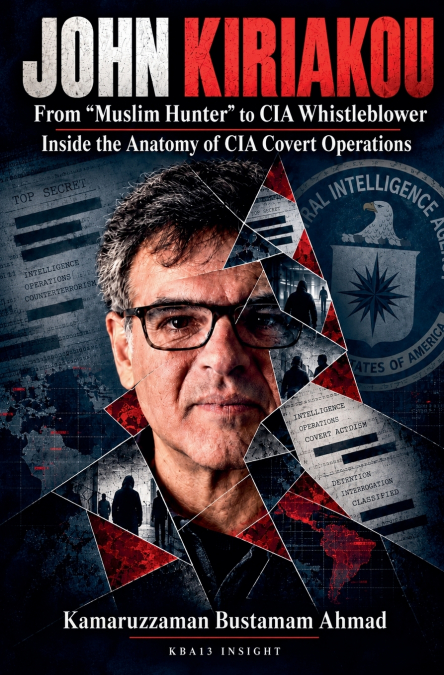
What happens when a CIA officer who helped hunt America’s enemies becomes one of the Agency’s most outspoken critics?John Kiriakou: From 'Muslim Hunter' to CIA Whistleblower reconstructs one of the most extraordinary trajectories to emerge from the post-9/11 intelligence world. It follows John Kiriakou from his early career as a CIA analyst and operations officer through counterterrorism assignments in Greece and Pakistan, the 2002 capture of Abu Zubaydah, the emergence of the CIA’s detention and interrogation program, his explosive 2007 television interview about waterboarding, his federal prosecution, imprisonment, and eventual reinvention as a public commentator on intelligence and covert operations.But this is not simply the story of one former CIA officer.Using memoirs, court records, congressional investigations, declassified government documents, contemporary journalism, and nearly two decades of recorded interviews, Kamaruzzaman Bustamam Ahmad uses Kiriakou’s career as a window into the machinery of modern intelligence operations.How does the CIA recruit and develop officers? How are human sources cultivated? What role do money, access, cover, liaison services, surveillance, targeting, and deception play in covert operations? How did the relationship between Washington and Pakistan shape the hunt for al-Qaeda after September 11? What happens when intelligence produced in the field collides with assumptions made at headquarters? And who controls the story when the operations themselves are secret?Central to the book is another problem: how should we read the testimony of a former intelligence officer?Kiriakou has become one of the most visible public narrators of the CIA. Yet his accounts include first-hand experience, institutional hearsay, later recollection, personal interpretation, and claims that can sometimes be tested against documentary evidence. Rather than treating him either as an unquestionable whistleblower or as an unreliable dissident, this book subjects his testimony to systematic examination.The result is both a study of a remarkable intelligence career and an anatomy of the institution behind it.From Faisalabad safe houses and Pakistani liaison operations to CIA headquarters, television studios, federal court, and prison, John Kiriakou reveals how covert operations are constructed, how secret institutions manage knowledge, how intelligence narratives are created and contested, and what happens when an officer who once operated inside the system begins telling the public how that system works.For readers of intelligence history, espionage, counterterrorism, national security, CIA operations, and the global War on Terror.