Gigi Romano
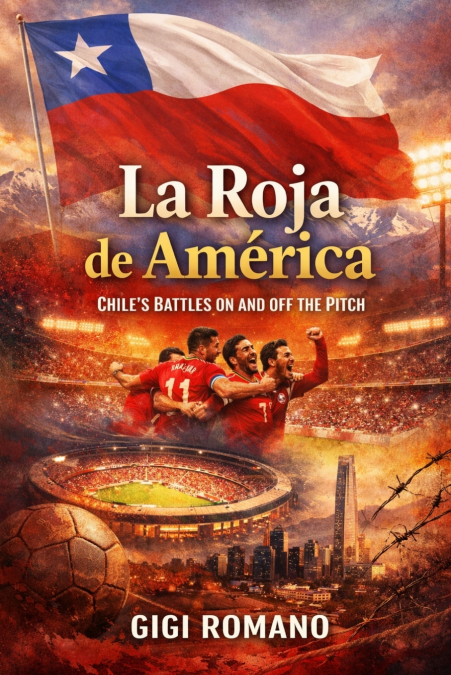
Chile’s men’s national team has lived a football life that refuses simple arcs. This is a story of a country that has hosted the world under strain, learned the continent’s hardest lessons in public, and built a modern identity fierce enough to conquer South America-then watched that certainty break under the unforgiving logic of qualification tables and generational change.From the early decades when international football became a public language in Chile, through the myth-making pressure of the 1962 World Cup, the book follows La Roja as a national institution as much as a sporting team. Stadiums become more than venues, rivalries become emotional geography, and football becomes a stage where pride, scrutiny, and memory all travel with the shirt.At the center is the tactical and cultural revolution that redefined Chile in the 2010s-pressing as identity, intensity as a civic expectation, and leadership hardened by finals decided on nerve. The narrative then closes at the present day with Chile confronting the most difficult test in elite sport: sustaining a style and a standard after the generation that forged it has passed, and rebuilding in full public view with no room to hide from the facts.