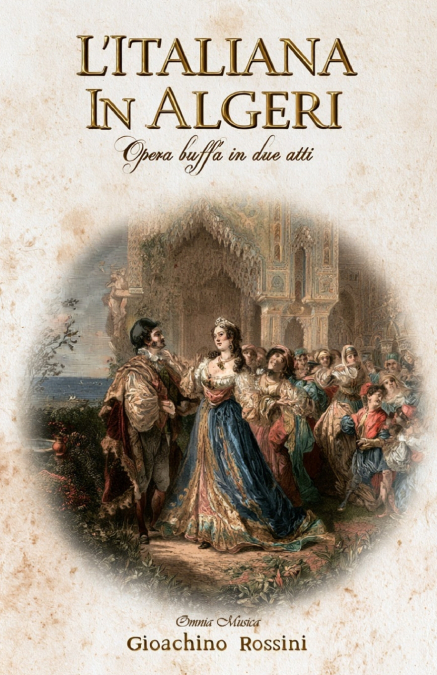
L’Italiana in Algeri è un dramma giocoso in due atti di Gioachino Rossini su libretto di Angelo Anelli, rappresentato per la prima volta a Venezia nel 1813. La vicenda ruota attorno a Isabella, giovane italiana giunta ad Algeri alla ricerca del suo amato Lindoro, tenuto schiavo dal capriccioso bey Mustafà. Stanco della moglie Elvira, Mustafà vuole sbarazzarsi di lei dandola in sposa proprio a Lindoro, per poi prendere Isabella come nuova moglie. Isabella ritrova Lindoro e, insieme a lui e al buffo spasimante Taddeo che l’ha seguita, ordisce un ingegnoso stratagemma: finge di accettare la corte del bey, ma a patto che egli dimostri il proprio valore sottoponendosi al rito del 'Pappataci' - un titolo onorifico che lo condanna a mangiare, bere e tacere - e conceda a Lindoro, presentato come suo parente, una nave per tornare in Italia.Nel secondo atto l’astuzia si compie: durante la farsesca cerimonia del Pappataci, Mustafà si ingozza e beve credendo di conquistare così l’amore di Isabella, mentre lei, Lindoro e i compatrioti italiani lo ubriacano abilmente. Approfittando del torpore generale, gli italiani fuggono a bordo della nave promessa. Mustafà, quando si accorge dell’inganno, è ormai beffato e impotente; umiliato ma rassegnato, comprende la superiorità dell’astuzia femminile italiana, torna dalla fedele Elvira e rinuncia alle sue follie. L’opera si chiude con il coro che celebra l’amore, la fedeltà e il trionfo dell’ingegno sulla prepotenza.L’Italiana in Algeri is a dramma giocoso in two acts by Gioachino Rossini, with a libretto by Angelo Anelli, first performed in Venice in 1813. The story centres on Isabella, a young Italian woman who has arrived in Algiers in search of her beloved Lindoro, who is being held as a slave by the capricious Bey Mustafà. Tired of his wife Elvira, Mustafà wants to get rid of her by marrying her off to Lindoro, so that he can then take Isabella as his new wife. Isabella finds Lindoro and, together with him and the comical suitor Taddeo who has followed her, devises an ingenious ruse: she pretends to accept the Bey’s courtship, but on condition that he proves his worth by undergoing the ’Pappataci’ ritual - an honorary title that condemns him to eat, drink and remain silent - and grants Lindoro, presented as her relative, a ship to return to Italy.In the second act, the ruse is carried out: during the farcical ’Pappataci’ ceremony, Mustafà gorges himself and drinks, believing he is thus winning Isabella’s love, whilst she, Lindoro and their Italian compatriots skilfully get him drunk. Taking advantage of the general stupor, the Italians flee aboard the promised ship. By the time Mustafà realises he has been deceived, he is already the butt of the joke and powerless; humiliated but resigned, he acknowledges the superiority of Italian feminine cunning, returns to his faithful Elvira and renounces his follies. The opera concludes with the chorus celebrating love, fidelity and the triumph of ingenuity over arrogance.