Inicio > Matemáticas y ciencia > Biologia, ciencias de la vida > Botánica y ciencias de las plantas > Risposta dei genotipi di cartamo a diversi livelli di fertilizzante
Risposta dei genotipi di cartamo a diversi livelli di fertilizzante

Risposta dei genotipi di cartamo a diversi livelli di fertilizzante

Ganpat Kote / Pritam Bhutata / Sachin Dhale

92,31 €
IVA incluido
Disponible
Editorial:
KS OmniScriptum Publishing
Año de edición:
2026
Materia
Botánica y ciencias de las plantas
ISBN:
9786209416163
92,31 €
IVA incluido
Disponible
Añadir a favoritos

Il cartamo (Carthamus tinctorius L.) è un’importante coltura rabbiosa di semi oleosi. Il cartamo ha un’adattabilità superiore alle condizioni di scarsa umidità. È stato coltivato in India per i suoi fiori colorati e per l’olio molto apprezzato. È urgente sviluppare pratiche di gestione e genotipi adatti a rendere la coltivazione del cartamo un’iniziativa di successo nella regione di Marathwada, caratterizzata da terreni a elevata umidità. Per questo motivo si è ritenuto necessario studiare l’effetto dell’applicazione di vari livelli di fertilizzanti a diversi genotipi di cartamo in condizioni di irrigazione. Di conseguenza, è stato formulato il presente progetto di ricerca intitolato 'Risposta dei genotipi di cartamo (Carthamus tinctorius L.) a diversi livelli di fertilizzazione'. L’applicazione dei livelli di fertilizzazione F3 (90:60:00 kg NPK ha-1) e F2 (60:40:00 kg NPK ha-1) ha fatto registrare attributi di crescita, attributi di resa, resa in semi, resa in paglia, resa biologica, resa in olio, rendimenti monetari lordi e rendimenti monetari netti significativamente superiori rispetto all’applicazione del livello di fertilizzazione F1 (30:20:00 kg NPK ha-1). Tra i genotipi di cartamo, il genotipo PBNS-12 (G7) ha registrato la resa maggiore.

Artículos relacionados

  • The Green Architecture
    Ali Mirshafieyan / Ghazal Yeganeh / Maryam Zamani Motlagh
    Protecting green energy as well as non-renewable energy, as well as their sustainable use, many advances in the technology of extracting oil products and other reserves under the ground have caused many improvements. In this regard, proposing the design of buildings in which the consumption of fossil fuels reaches its lowest level is considered one of the important solutions in...
    Disponible

    82,54 €

  • Responsible Use and Management of Agrochemicals
    Juan Carlos Nava
    Uso y manejo responsable de agroquímicos is a work product of the author’s experiences (undergraduate and graduate professor, with research and extension projects), aimed at producers, companies, professionals, students, advisors, researchers, among others.Due to its structure and content, it is expected to be a valuable aid to all people directly or indirectly involved in the ...
    Disponible

    49,45 €

  • Hope in the Soil
    Ellen G White
    Before edible classrooms began 'sprouting' in elementary schools, before buzzwords like 'sustainable agriculture', 'organic,' or 'veganic' came into existence, an exceptional woman named Ellen G. White penned numerous letters and articles on the importance of farming, an outdoor life, and manual labor. Though often remembered for other things, Mrs. White was actively engaged in...
    Disponible

    18,38 €

  • The Green Revolution
    Binitha Sophine Emmanuel
    The Green Revolution, a transformative era in the annals of agriculture, emerged as a game-changing force during the mid-20th century, fundamentally reshaping the methodology of food production and steering the trajectory of global food security. Characterized by a sequence of technological breakthroughs, the Green Revolution aimed to substantially augment agricultural producti...
    Disponible

    53,23 €

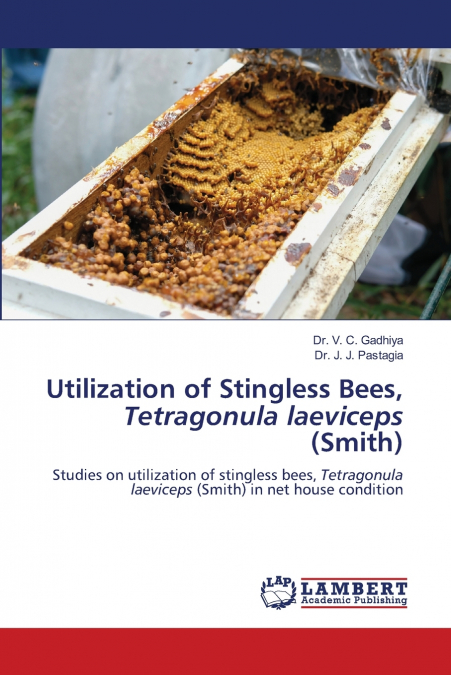
  • Utilization of Stingless Bees, Tetragonula laeviceps (Smith)
    Dr. J. J. Pastagia / Dr. V. C. Gadhiya
    The present investigations on utilization of stingless bees, T. laeviceps Smith in net house condition carried out with the broad aspects like flowers visited by stingless bees, T. laeviceps Smith, toxicity of insecticides to T. laeviceps Smith workers, floral biology of musk melon, foraging behavior of stingless bees, T. laeviceps Smith in net house condition, effect of pollin...
    Disponible

    84,80 €

  • La révolution verte
    Binitha Sophine Emmanuel
    La révolution verte, une ère transformatrice dans les annales de l’agriculture, est apparue comme une force qui a changé la donne au milieu du 20e siècle, remodelant fondamentalement la méthodologie de la production alimentaire et orientant la trajectoire de la sécurité alimentaire mondiale. Caractérisée par une série de percées technologiques, la révolution verte visait à augm...
    Disponible

    53,29 €

Otros libros del autor

  • Reaktion von Saflor-Genotypen auf unterschiedliche Düngemittelmengen
    Ganpat Kote / Pritam Bhutata / Sachin Dhale
    Färberdistel (Carthamus tinctorius L.) ist eine wichtige Ölsaatenpflanze für die Saison. Färberdistel ist sehr anpassungsfähig an die Bedingungen mit geringer Feuchtigkeit. Sie wird in Indien wegen ihrer farbigen Blüten und ihres geschätzten Öls angebaut. Es besteht die dringende Notwendigkeit, geeignete Bewirtschaftungsmethoden und Genotypen zu entwickeln, um den Färberdistela...
    Disponible

    92,31 €

  • Réponse des génotypes de carthame à différents niveaux d’engrais
    Ganpat Kote / Pritam Bhutata / Sachin Dhale
    Le carthame (Carthamus tinctorius L.) est une culture oléagineuse importante pour le rabi. Le carthame a une capacité d’adaptation supérieure aux conditions d’humidité insuffisante. Il est cultivé en Inde pour ses fleurs colorées et son huile très appréciée. Il est urgent de développer des pratiques de gestion et des génotypes appropriés pour faire de la culture du carthame une...
    Disponible

    92,31 €

  • Reakcja genotypów krokosza barwierskiego na różne poziomy nawożenia
    Ganpat Kote / Pritam Bhutata / Sachin Dhale
    Krokosz barwierski (Carthamus tinctorius L.) jest ważną rośliną oleistą uprawianą w okresie rabi. Krokosz barwierski ma doskonałą zdolność adaptacji do skąpych warunków wilgotnościowych. Jest uprawiany w Indiach ze względu na kolorowe różyczki i ceniony olej. Istnieje pilna potrzeba opracowania odpowiednich praktyk zarządzania i genotypów, aby uprawa krokosza barwierskiego była...
    Disponible

    92,31 €

  • Resposta de genótipos de cártamo a diferentes níveis de fertilizantes
    Ganpat Kote / Pritam Bhutata / Sachin Dhale
    O cártamo (Carthamus tinctorius L.) é uma importante cultura de sementes oleaginosas de rabi. O cártamo tem uma adaptabilidade superior a condições de humidade escassa. Tem sido cultivado na Índia quer pelas suas florzinhas coloridas quer pelo seu óleo muito apreciado. Há uma necessidade urgente de desenvolver práticas de gestão e genótipos adequados para tornar a cultura do cá...
    Disponible

    92,25 €