Rahul Basu
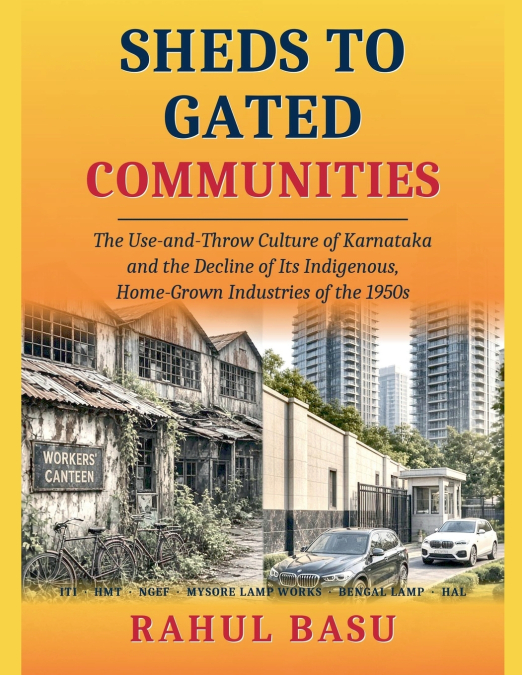
From Sheds to Gated Communities: The Story of Karnataka’s Industrial DeclineBook DescriptionHow did Karnataka, once a promising centre of industrial development and engineering excellence, witness the decline of its industrial establishments while gated communities, commercial complexes and real estate developments transformed its urban landscape?From Sheds to Gated Communities investigates the economic, political and institutional forces behind Karnataka’s industrial decline. It traces the transformation of an industrial economy-from factories, workshops and manufacturing establishments to abandoned industrial sheds, converted industrial land and the expanding landscape of gated residential communities.The book examines the complex relationship between industrial policy, governance, political patronage, bureaucratic decisions, labour relations, infrastructure, land use and investment. It questions whether Karnataka’s industrial decline was simply the consequence of changing economic conditions and global competition, or whether deeper failures of public administration, institutional accountability and industrial planning played an equally significant role.Through historical analysis, institutional examination and documented developments, the book explores the consequences of deindustrialisation for employment, technological capability, entrepreneurship and regional economic development. It also considers the paradox of urban prosperity: while real estate development and rising property values may create an appearance of economic growth, they cannot automatically replace the productive capacity, skilled employment and technological ecosystems generated by manufacturing.Moving beyond conventional narratives of economic growth, this book raises uncomfortable questions about the priorities of successive governments, the management of public assets and the long-term consequences of allowing productive industrial infrastructure to give way to speculative urban development.From Sheds to Gated Communities is ultimately a critical examination of Karnataka’s development trajectory and a call to reconsider what constitutes genuine economic progress. It will interest economists, historians, public administrators, policymakers, industrialists, researchers and readers concerned about India’s industrial future.When factories disappear and real estate takes their place, is it development-or the erosion of an industrial legacy?