The battle of Sempach 1386

The battle of Sempach 1386

Luca Stefano Cristini

43,73 €
IVA incluido
Disponible
Editorial:
Soldiershop
Año de edición:
2025
ISBN:
9791255893080
43,73 €
IVA incluido
Disponible
Añadir a favoritos

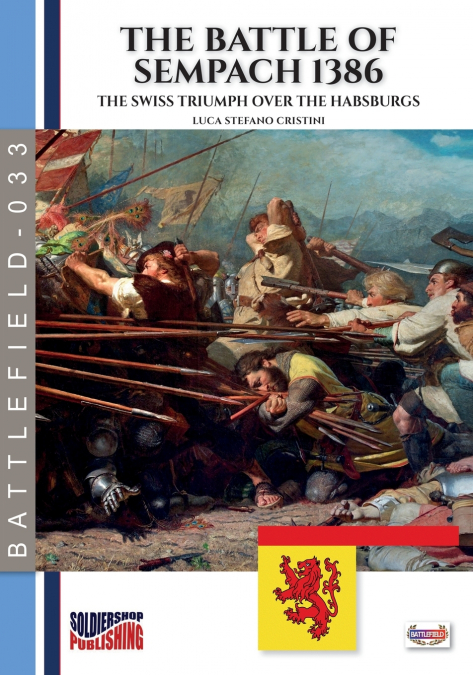
In this book we will see how an army of Swiss militiamen, vastly inferior in numbers and weaponry, defeated the army of Archduke Leopold Ill, one of the most skilled military leaders of his time, a man willing to have his knights fight on foot with lances rather than recklessly charge into a wall of arrows, and how he suffered one of the most complete defeats in Swiss history. The Battle of Sempach in 1389 was the decisive battle in the war between the Swiss Confederation and the Duchy of Austria (Habsburg). This episode is remembered as the culmination of the Confederates’ long struggle for liberation from Habsburg feudal rule. The overwhelming Swiss victory marked an epoch-making turning point: on the one hand, it consolidated the unity and power of the young Confederation, and on the other, it brought about the definitive collapse of Habsburg power in the region. The victory also gave cities such as Lucerne, Bern and Solothurn the opportunity to expand their territories. The battle is also immortalised by the famous heroic deed of Arnold von Winkelried, a legendary figure who, according to tradition, sacrificed his life to break through enemy lines, a founding myth that has fuelled Swiss national identity for centuries.


Artículos relacionados

Otros libros del autor

  • Le mura di Bergamo e l’esercito veneto fra 500 e 600
    Luca Stefano Cristini
    Correva l'Anno del Signore 1590. Così scriveva un soddisfatto e pago Alvise Grimani, l'allora comandante veneto della piazza di Bergamo, al termine dei lavori di realizzazione degli oltre cinque chilometri di mura porte e bastioni : 'La città è tutta serrata con baluardi e i suoi membri quasi tutti terrapienati, compite le piazze, i parapetti e le traverse per coprirsi ...
    Disponible

    36,31 €

  • Carro leggero giapponese Type 89 Yi-Go
    Luca Stefano Cristini
    Il carro armato leggero giapponese Type 89 Yi-Go (spesso confuso o indicato come 'li-Go') fu uno dei principali carri leggeri dell’Esercito Imperiale Giapponese durante la Seconda guerra mondiale. Progettato a metà degli anni Trenta, era pensato per accompagnare la fanteria e operare in territori difficili come giungle e isole del Pacifico. Ma anche utilizzato dalla Marina Impe...
    Disponible

    37,06 €

  • The Kriegssbuch & the art of warfare by the Landsknechts in the 16th Century
    Luca Stefano Cristini
    Our volume, the first in a series that we have chosen to entitle The Art of War of the Landsknechts in the Sixteenth Century, is the result of the collection and study of several contemporary works published around the middle of the sixteenth century. Albrecht von Brandenburg-Ansbach’s Kriegssbuchs (c. 1550-1555) can be read as the foundational military 'Grundgesetz' of the ear...
    Disponible

    58,71 €

  • Japanese light tank Type 89 Yi-Go
    Luca Stefano Cristini
    The Japanese Type 89 Yi-Go light tank (often confused with or referred to as the 'li-Go') was one of the main light tanks used by the Imperial Japanese Army during World War II. Designed in the mid- 1930s, it was intended to accompany infantry and operate in difficult terrain such as jungles and Pacific islands. It was also used by the Imperial Navy for its several landings in ...
    Disponible

    37,06 €

  • Uniforms of the Hessian-Kassel Army 1813-1814
    Luca Stefano Cristini
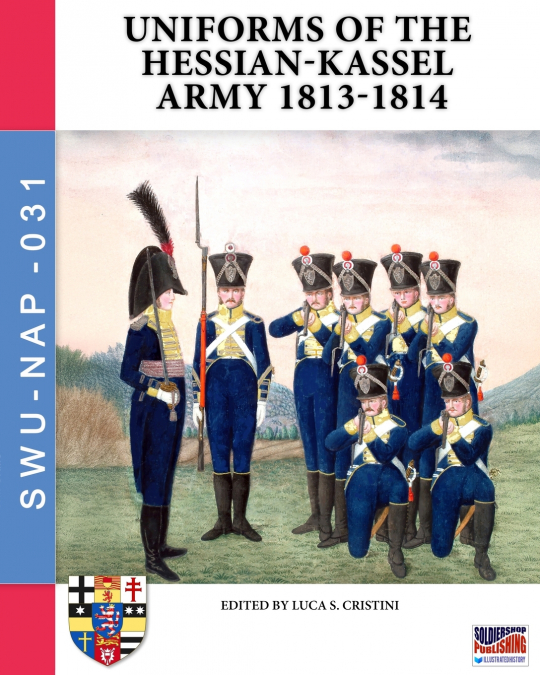
    In presenting this volume, our intent is not to recount battles and campaigns, or to provide an in-depth view of the structures, doctrines etc that shaped Hesse’s military performance. Rather, it is to present an incredible collection of 50 contemporary plates dedicated to the uniforms of this army with a great military tradition. Drawing on archival documents, we came across t...
    Disponible

    43,08 €

  • Carro russo medio T-34
    Luca Stefano Cristini
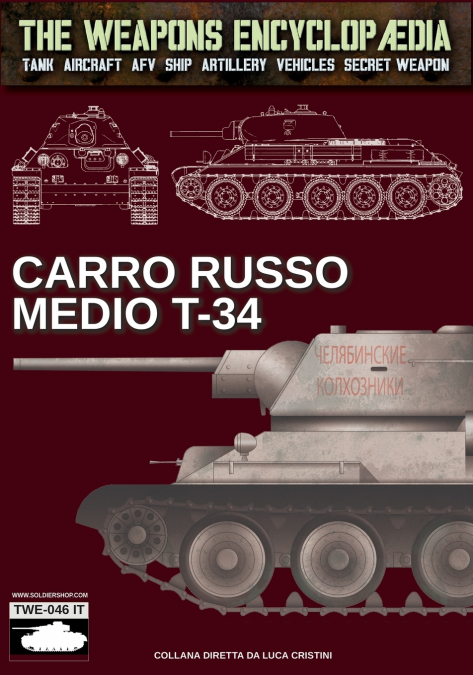
    Il T-34 rappresenta una famiglia di carri armati medi sovietici, prodotti ininterrottamente dal 1940 al 1958, che costituì la spina dorsale delle forze corazzate dell’Unione Sovietica per l’intera durata della Seconda Guerra Mondiale e oltre. L’impatto del T-34 fu profondo e duraturo. Influenzò radicalmente le operazioni di combattimento sul Fronte Orientale e stabili un nuovo ...
    Disponible

    37,06 €