Nox Vale
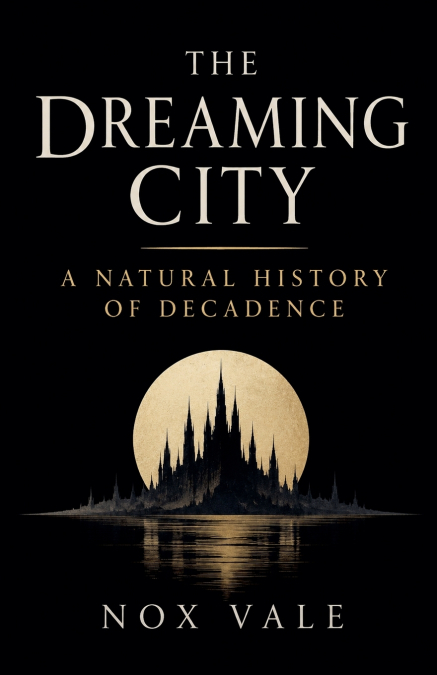
An emperor wakes in a palace that has stood longer than most nations have had names. He takes a draught that keeps him alive-and keeps him dependent. He is the four hundred and twenty-eighth ruler of an empire that has been dominant for ten thousand years. Its dragons sleep. Its sorcery is borrowed. Its people dream. And the reader already knows the city will burn.Michael Moorcock’s Melniboné is not prophecy. It is a diagnostic instrument. In The Dreaming City, that instrument is turned on real civilizations.What happens when a society accumulates so much sophistication-laws, monuments, privileges, self-image-that its capacity to adapt falls behind? The book defines decadence not as moral collapse or aesthetic excess, but as a measurable ratio: accumulated achievement outrunning the ability to notice change, decide, and act. It then tests the definition against four historical cases-late Rome, the court of Versailles, the Ottoman Empire, and the Soviet nomenklatura-before applying it, with deliberate caution, to the present: the attention economy, outsourced intelligence, and the strange problems that arise when material scarcity begins to recede.Along the way it examines the mechanisms that produce the condition: the quiet drift from capability to possession, the normalization of cruelty when power is no longer answerable, the dangers of living on credit from powers one does not control, the retreat into controlled experience, and the thinning of purpose that follows long security. It asks what is actually lost when a decadent order falls, and whether decadence is a disease or simply the price of institutional success.Written with the rigor of history and the narrative force of the fiction that inspired it, The Dreaming City is both a study of how civilizations lose the ability to correct themselves and a warning about the forms that loss can take in our own time. Somewhere the dragons are still sleeping. Somewhere a fleet is being fitted out. The question the book leaves open is whether anyone inside the city can still hear the difference.