Edmund Spenser
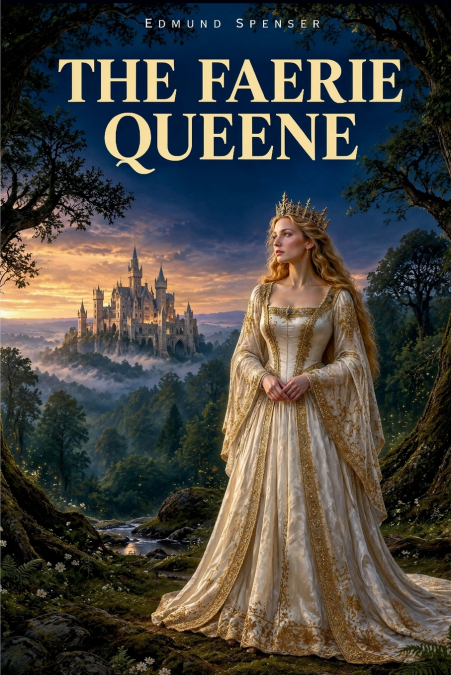
Enter a realm of enchanted forests, legendary knights, mysterious castles, and extraordinary quests in The Faerie Queene, Edmund Spenser’s celebrated masterpiece of English Renaissance poetry.First published in 1590 and expanded in 1596, this monumental epic brings together medieval chivalry, classical mythology, Christian symbolism, and the imaginative richness of fantasy. Across the magical landscapes of Faery Land, heroic adventures become compelling explorations of courage, temptation, honor, and the difficult pursuit of virtue.A World of Chivalry, Magic, and Hidden MeaningsAt the heart of the poem is a remarkable literary vision: each of its six completed books examines a different virtue-Holiness, Temperance, Chastity, Friendship, Justice, and Courtesy. Knights travel through strange kingdoms, confront dangerous adversaries, and encounter figures whose appearances may conceal unexpected meanings. Every journey offers both the excitement of romance and an invitation to reflect on human character.Spenser’s world is filled with unforgettable imagery. Ancient woodlands, magnificent palaces, enchanted gardens, and shadowy wildernesses emerge through language of extraordinary color and musicality. His distinctive nine-line Spenserian stanza lends the poem an elegant rhythm that later inspired generations of English poets.Drawing on Arthurian legend and the traditions of classical epic, Spenser created something uniquely his own: a vast allegorical landscape where the adventures of knights also illuminate moral and spiritual questions. Beauty can be deceptive, strength requires judgment, and noble intentions must be tested against the uncertainties of experience.A Landmark of English Renaissance LiteratureWritten during the reign of Elizabeth I, The Faerie Queene also reflects the political ideals, religious debates, and cultural ambitions of the Elizabethan age. The figure of Gloriana, the Faerie Queene, evokes the grandeur of royal authority, while the poem’s wider symbolic world invites readers to consider the responsibilities of leadership and the meaning of true nobility.One of the defining works of the English Renaissance, this epic helped shape the course of English poetry. Its influence can be felt in writers including John Milton, Lord Byron, John Keats, and Percy Bysshe Shelley. Its blend of heroic romance and layered allegory continues to reward readers who love literature that is both imaginative and intellectually rich.An Unforgettable Journey Through Poetry and ImaginationThe Faerie Queene is an exceptional choice for readers interested in classic poetry, Arthurian legends, medieval adventure, Renaissance history, mythology, and the literary roots of fantasy. It is equally rewarding for students exploring English literary tradition and for anyone drawn to beautifully crafted verse and timeless ethical questions.Discover a world where every forest holds a mystery, every quest carries a deeper purpose, and the pursuit of virtue becomes an adventure of extraordinary beauty and imagination.