Corwin Ashfeld Vance
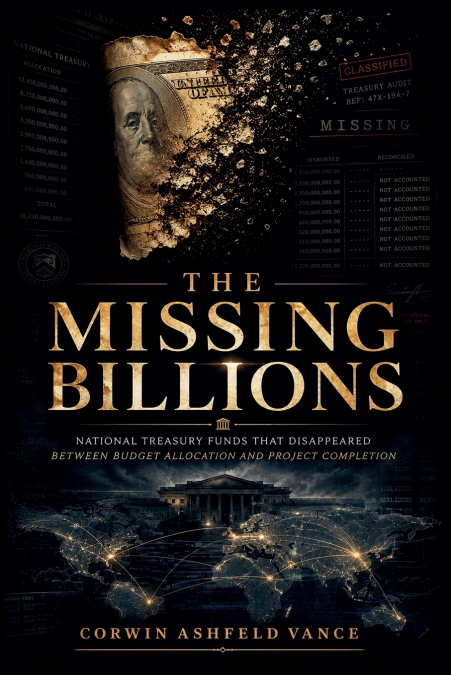
A general is dying in exile with four billion dollars scattered across bank vaults on three continents. A finance minister signs a completion certificate for a hospital that was never built. A Swiss banker opens a numbered account and asks no questions, because the fee for asking none is exactly why the money is there. This is not fiction. Every name, every figure, and every vanished fortune in this book is real, drawn from court records, leaked ledgers, and the World Bank’s own internal files.For eighty years, the world’s wealthiest nations have sent hundreds of billions of dollars into the treasuries of developing countries, money meant to build the roads, hospitals, schools, and power plants that would lift entire populations out of poverty. A staggering share of it never arrived. It was diverted in broad daylight, wired offshore within hours of landing in a central bank, laundered through shell companies with names like paper ghosts, and spent on yachts, Hollywood films, and Manhattan penthouses while the villages it was meant to serve waited for a clinic that would never open.This book follows that money to the end of the trail. It reconstructs how Mobutu Sese Seko turned an entire nation into his personal bank account while the world’s lenders kept writing checks. It walks through the charitable foundations that let Indonesia’s Suharto quietly become the most financially destructive head of state in modern history. It sits inside the Geneva law office that spent two decades chasing four billion dollars stolen by a Nigerian general who never faced trial. It follows a Malaysian financier’s yacht, his art collection, and the Oscar winning film he helped finance with money that was supposed to build his country’s future. And it shows, using research that will unsettle anyone who has ever donated to an aid campaign, that a child in a Ugandan classroom in the 1990s received just thirteen cents of every dollar her government had already been paid to spend on her education.What makes this book different from the usual accounts of foreign corruption is that it refuses to let any single villain carry the whole story. The dictators stole, without question. But the international institutions that financed them knew, in most cases, exactly what was happening, and kept lending anyway, because a continued flow of money served careers, alliances, and Cold War calculations more than it served the people the loans were named for. The banks that accepted the stolen billions built entire business models on asking no questions. This is a book about a system, not just the men who exploited it, and about the auditors, whistleblowers, and investigative journalists who risked their careers and sometimes their lives trying to stop it.Written with the pace and tension of a financial thriller and grounded entirely in verifiable public record, this is the book for readers of Kleptopia and The Looting Machine who want to understand not just that the money disappeared, but precisely how, who let it happen, and what it would actually take to bring it home. You will not look at foreign aid, offshore banking, or a headline about a stolen billion dollars the same way again. Once you start reading, you will not want to stop until the last page.