Daniel Rosenburg
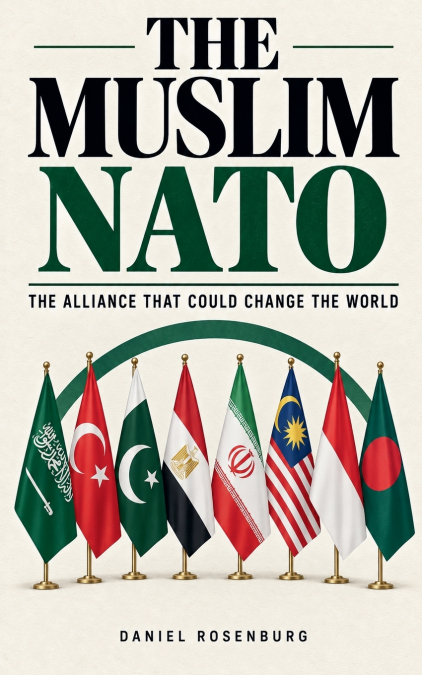
What if the Muslim world stopped acting as a collection of divided states and began working as one organised geopolitical force?The Muslim NATO: The Alliance That Could Change the World explores the possibility of a NATO-style alliance bringing together leading Muslim-majority nations for collective defence, economic cooperation and greater strategic independence.Across the Muslim world are countries with enormous populations, valuable resources, powerful armed forces and control over vital trade routes. Saudi Arabia offers financial influence and energy reserves. Türkiye brings military experience, strategic geography and a growing defence industry. Pakistan contributes a large professional military and the Muslim world’s only known nuclear arsenal. Egypt controls the Suez Canal, while Malaysia, Indonesia and Bangladesh connect the alliance to Asia.Could these nations overcome political rivalries, economic differences and competing relationships with foreign powers?This thought-provoking book examines what a Muslim NATO could realistically look like, who might join and how it could operate. It considers the possible roles of Saudi Arabia, Türkiye, Pakistan, Egypt, Iran, Qatar, Malaysia, Indonesia and Bangladesh. It explores collective defence, nuclear deterrence, intelligence-sharing, cyber-security, military cooperation and a shared defence industry.The book also looks beyond military power. Could Muslim countries create a stronger trading bloc, develop shared infrastructure and reduce their dependence on Western and Chinese markets? Could their combined energy resources, geography and consumer markets create genuine economic influence?The challenges would be enormous. Saudi Arabia could not finance the organisation alone. Türkiye would have to balance membership with its existing NATO commitments. Pakistan’s nuclear weapons would raise difficult questions, while relations between Saudi Arabia and Iran would test whether Sunni-majority and Shia-majority powers could cooperate.The alliance would also need to respond to major geopolitical issues. Gaza has exposed the limitations of existing international institutions and divided political responses. Syria remains a battlefield for competing interests. Relations with Israel divide governments, while America, China and Russia each seek influence across the Muslim world.Written in clear and accessible language, The Muslim NATO does not assume that such an alliance is inevitable. Instead, it provides a serious examination of its possibilities, contradictions and risks. It asks whether shared interests are strong enough to overcome nationalism, distrust and competition for leadership.This is not simply a book about armies and weapons. It is a study of power, unity, economics, diplomacy and the changing international order. Ideal for readers interested in geopolitics, international relations, military affairs, the Middle East and Islamic unity, it offers a challenging vision of what the Muslim world might become.If Muslim-majority nations already possess the population, resources, geography, military capability and economic strength to become one of the world’s great geopolitical forces, one question remains:What is stopping them?