Inicio > Tecnología, ingeniería, agricultura > > Química industrial > Tecnología de alimentos y bebidas > The Regulatory Landscape in the EU for Dairy Products Derived from Precision Fermentation
The Regulatory Landscape in the EU for Dairy Products Derived from Precision Fermentation

The Regulatory Landscape in the EU for Dairy Products Derived from Precision Fermentation

Federica Ronchetti / Kai P. Purnhagen / Laura Springer

55,68 €
IVA incluido
Disponible
Editorial:
Springer Nature B.V.
Año de edición:
2024
Materia
Tecnología de alimentos y bebidas
ISBN:
9783031496912
55,68 €
IVA incluido
Disponible
Añadir a favoritos

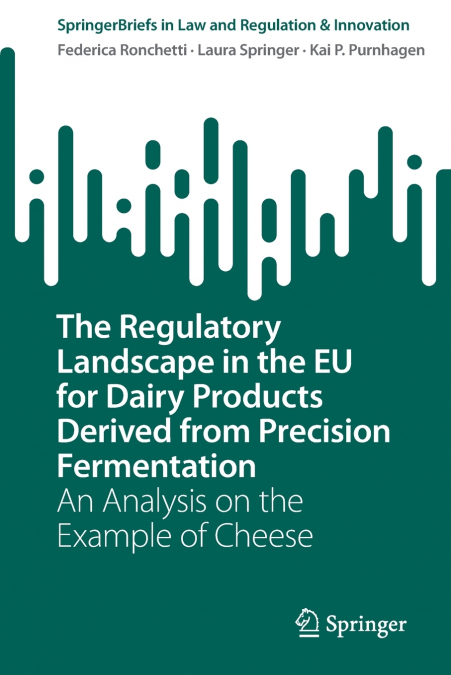
This book assesses the EU legal framework applicable to dairy products obtained through precision fermentation. It maps the authorisation and labelling requirements for these products to be placed on the EU market. It compares these provisions to those governing the food markets in the USA and Singapore, which are considered to be more innovation-friendly. At the time of writing, the precision-fermented dairy sector is still in the developmental phase, with only a few precision-fermented dairy alternatives available on the market, none of which are present in the EU. Regulatory uncertainty has been cited as significant obstacle for food business operators seeking to introduce alternative protein products in the EU. The book confirms these reports, as the current EU regulatory framework presents several legal uncertainties that are challenging for food business operators to overcome. Broadly speaking, there are two authorisation frameworks applicable to dairy products obtained through precision fermentation in the EU. The choice between these frameworks depends on the presence of genetically modified organisms (GMOs) or residues thereof in the final product. If such GMOs or residues are present, the pre-market authorisation procedure is governed by the Genetically Modified Food and Feed Regulation (GMFR). If the final product does not contain any GMOs or residues, it falls under the scope of the Novel Food Regulation (NFR), and the pre-market authorisation procedure is governed accordingly. Both of these authorisation pathways entail high regulatory requirements, which can pose challenges for the development of the precision fermentation sector. Despite the difficulty in accurately classifying products, it is crucial for food business operators to comprehend the applicable legal framework early in the product development process, given that the authorisation paths differ in their standards. In addition to pre-market authorisation requirements, companies must address labelling issues. Food labelling shall provide a basis for consumers to make informed choices in relation to the foods they consume. The primary objective of EU food labelling law is to prevent consumer deception , making it crucial for dairy products and their animal-free alternatives, to adhere to a stringent naming law as stipulated in the Common Market Organisation and specific accompanying legislation. Moreover, it is imperative to consider regulations regarding the use of health and nutrition claims, as well as labels such as 'vegan' or 'organic', etc. Furthermore, the labelling of novel foods and genetically modified foods may necessitate mandatory information specified in the authorisation process. The book serves as a comprehensive guideline for food business operators involved in the production of precision-fermented dairy alternatives, aiding them in navigating the intricate European regulatory landscape.
Artículos relacionados

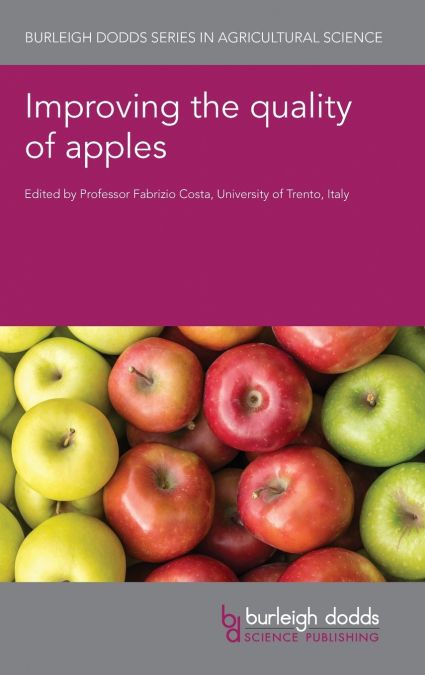
  • Improving the quality of apples
    Fabrizio Costa
    This collection reviews the wealth of recent research undertaken on the factors which can determine the quality of apples, focussing on attributes such as texture and nutritional content. The book also considers how these attributes can be optimised at both the pre- and postharvest stages in the value chain for apples as a means of meeting the increasing expectations and demand...
    Disponible

    234,72 €

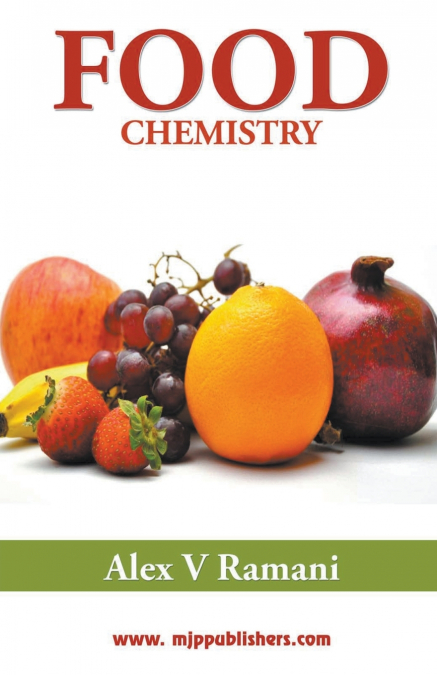
  • FOOD CHEMISTRY
    V. Ramani Alex
    This enlightening guide explores the chemical intricacies of what we eat. It unravels the basic chemical substances that constitute our food, and the methods through which these can be analyzed, providing a comprehensive understanding of what we consume. The book delves into how food supports our well-being, focusing on the essential nutrients required for our biochemical proce...
    Disponible

    21,52 €

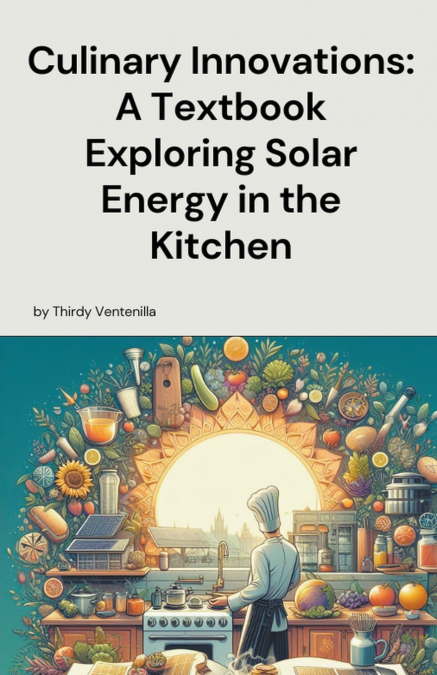
  • Culinary Innovations
    Thirdy Ventenilla
    'Culinary Innovations: A Textbook Exploring Solar Energy in the Kitchen' is a comprehensive manual that delves into the intersection of solar energy and culinary artistry. Through a blend of scientific exploration and practical application, this book offers readers a unique journey into the world of eco-friendly cooking powered by sunlight.The book begins by demystifying solar ...
    Disponible

    12,83 €

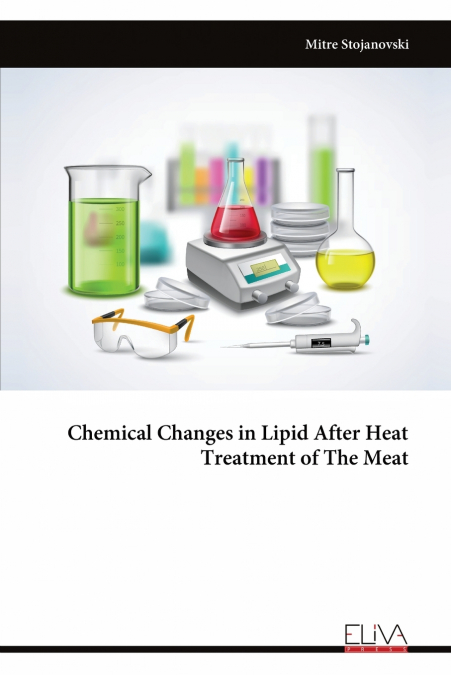
  • Chemical Changes in Lipid After Heat Treatment of The Meat
    Mitre Stojanovski
    Meat is a rich source of lightly-digestible proteins, fats, and minerals. The meat contains all the necessary nutrients in an appropriate ratio for maximum utilization by the human organism, and as a result, the meat is characterized by high digestibility of 96% and utilization of 98%, thus bringing meat into a high biological food product and nutritional value.The meat as a fo...
    Disponible

    47,76 €

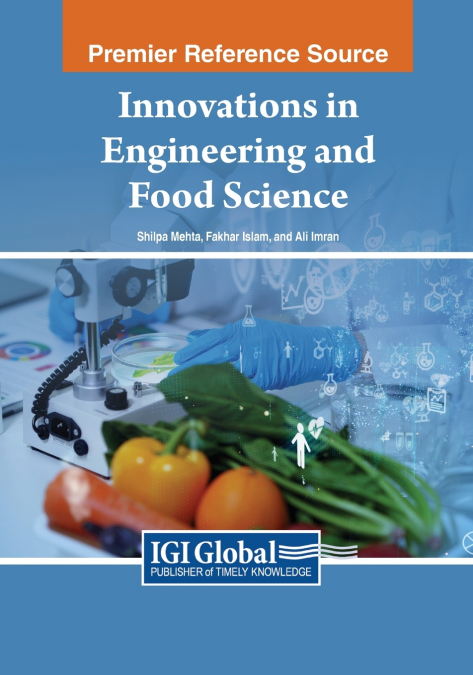
  • Innovations in Engineering and Food Science
    As the global population continues to grow, the depletion of Earth’s resources poses a significant challenge in ensuring food security for current and future generations. This book addresses this pressing issue by presenting innovative strategies and methods to reduce food loss, enhance production, identify alternative ingredients, and digitize the food system. It explores topi...
    Disponible

    262,26 €

  • Molecular Mechanism of Sheath Blight Tolerance in Rice
    Pankajini Samal
    Rice being the most important cereal of not only in India but in most of the Asian and African countries and also the most important cereal second to wheat only. In India the average productivity of rice is approximately 3.4 t/h which is much below than its highest productivity. The major constraints of rice production are different stresses which include both biotic and abioti...