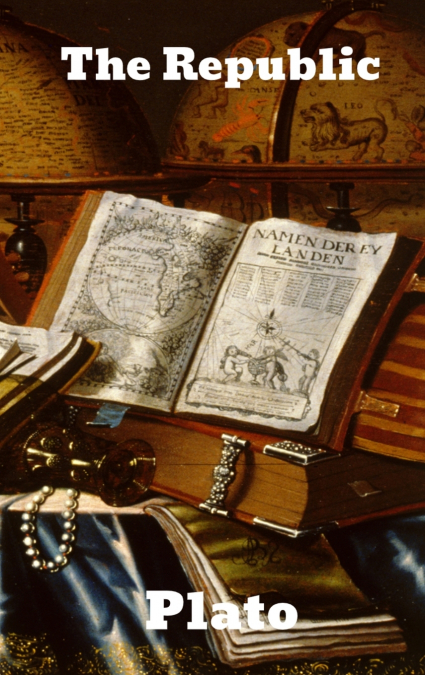
The Republic

The Republic

The Republic

Plato

36,85 €
IVA incluido
Consulta disponibilidad
Editorial:
Brian Westland
Año de edición:
1888
Materia
Filosofía
ISBN:
9781774410721
Añadir a favoritos

The Republic is a Socratic dialogue, written by Plato around 380 BC, concerning justice, the order and character of the just city-state, and the just man. It is Plato's best-known work, and has proven to be one of the world's most influential works of philosophy and political theory, both intellectually and historically.In the dialogue, Socrates talks with various Athenians and foreigners about the meaning of justice and whether the just man is happier than the unjust man. They consider the natures of existing regimes and then propose a series of different, hypothetical cities in comparison, culminating in Kallipolis, a city-state ruled by a philosopher king. They also discuss the theory of forms, the immortality of the soul, and the role of the philosopher and of poetry in society. The dialogue's setting seems to be during the Peloponnesian War.In the first book, two definitions of justice are proposed but deemed inadequate.[14] Returning debts owed, and helping friends while harming enemies, are commonsense definitions of justice that, Socrates shows, are inadequate in exceptional situations, and thus lack the rigidity demanded of a definition. Yet he does not completely reject them, for each expresses a commonsense notion of justice that Socrates will incorporate into his discussion of the just regime in books II through V.At the end of Book I, Socrates agrees with Polemarchus that justice includes helping friends, but says the just man would never do harm to anybody. Thrasymachus believes that Socrates has done the men present an injustice by saying this and attacks his character and reputation in front of the group, partly because he suspects that Socrates himself does not even believe harming enemies is unjust. Thrasymachus gives his understanding of justice and injustice as "justice is what is advantageous to the stronger, while injustice is to one's own profit and advantage".[15] Socrates finds this definition unclear and begins to question Thrasymachus. Socrates then asks whether the ruler who makes a mistake by making a law that lessens their well-being, is still a ruler according to that definition. Thrasymachus agrees that no true ruler would make such an error. This agreement allows Socrates to undermine Thrasymachus' strict definition of justice by comparing rulers to people of various professions. Thrasymachus consents to Socrates' assertion that an artist is someone who does his job well, and is a knower of some art, which allows him to complete the job well. In so doing Socrates gets Thrasymachus to admit that rulers who enact a law that does not benefit them firstly, are in the precise sense not rulers. Thrasymachus gives up, and is silent from then on. Socrates has trapped Thrasymachus into admitting the strong man who makes a mistake is not the strong man in the precise sense, and that some type of knowledge is required to rule perfectly. However, it is far from a satisfactory definition of justice.

Artículos relacionados

  • Introduction to a Future Way of Thought
    Kostas Axelos / Kenneth Mills
    'Technologists only change the world in various ways in generalized indifference; the point is to think the world and interpret the changes in its unfathomability, to perceive and experience the difference binding being to the nothing.'Anticipating the age of planetary technology Kostas Axelos, a Greek-French philosopher, approaches the technological question in this book, firs...
    Disponible

    20,64 €

  • Capsule
    John Kenneth Press
    Join John and Adam as they wander the mean streets of Japan on a psychedelic fueled search for identity. While fun for the average reader, this book could also serve as a philosphy textbook because of its ordered exploration of sources of identity. Ultimately this trip through nationalist attacks, sex, and drugs, will take you to a better understanding of yourself and your pl...
    Disponible

    13,44 €

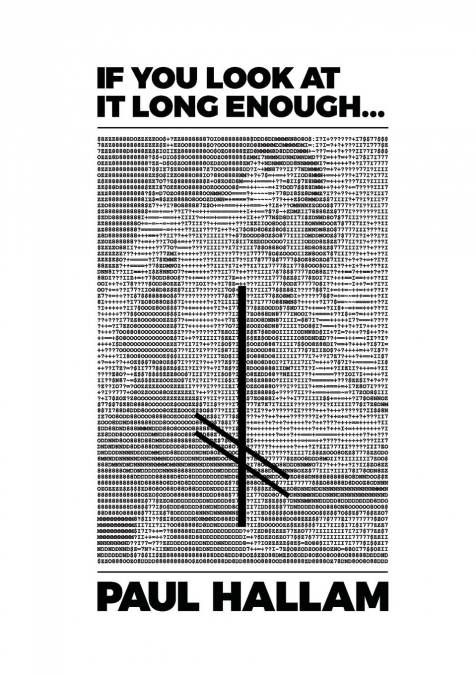
  • If you look at it long enough...
    Paul Hallam
    Originally written for an academic journal, If you look at it long enough... is primarily a personal account of Paul Hallam’s recollections of “self-abuse” through the consumption of porn over several decades. Challenging the familiar form of an “academic essay,” this autobiographical narrative raises several questions in relation to our contemporary morals related to sex in ge...
    Disponible

    13,72 €

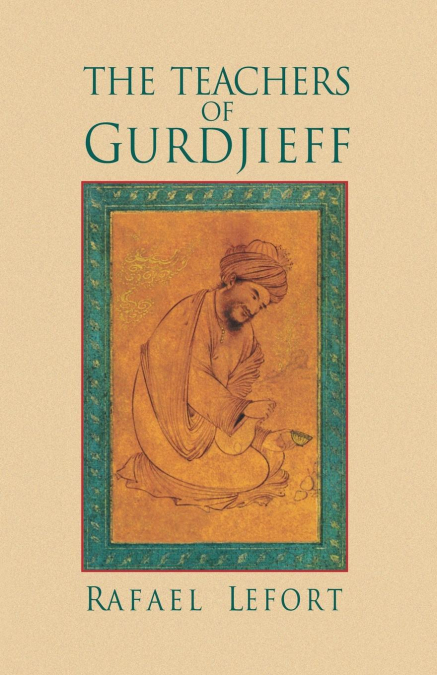
  • The Teachers of Gurdjieff
    Rafael Lafort / Rafael Lefort
    When The Teachers of Gurdjieff was first published more than 50 years ago, it made a considerable stir. George Ivanovich Gurdjieff had been one of the most famous mystics in the West in the first half of the 20th century - a teaching master who had many fashionable and influential pupils. He had a striking appearance and manner of teaching, and his teaching proved to be very in...
    Disponible

    22,79 €

  • Manifesto of the Communist Party
    Karl Marx
    The Communist Manifesto was first published on February 21, and it is one of the world’s most influential political tracts. Commissioned by the Communist League and written by communist theorists Karl Marx and Friedrich Engels, it laid out the League’s purposes and program. The Manifesto suggested a course of action for a proletarian (working class) revolution to overthrow the ...
  • The Art of Literature
    Arthur Schopenhauer
    Collected here are eight short essays, On Authorship, On Style, On the Study of Latin, On Men of Learning, On Thinking for Ones Self, On Criticism, On Reputation, On Genius, by the world renowned philosopher Arthur Achopenhauer. ...

Otros libros del autor

  • Cratylus
    Plato
    Does a name reveal what something truly is—or only what people agree to call it? A familiar word becomes a philosophical puzzle in this searching dialogue about language and truth.In Cratylus, Plato brings Socrates into conversation with Hermogenes and Cratylus over the correctness of names. Hermogenes grounds naming in convention and agreement; Cratylus argues that names posse...
    Disponible

    20,82 €

  • Philebus: Large Print
    Plato
    Is the happiest life the one with the most pleasure—or the one guided by reason? What if neither, on its own, is enough?In Philebus, Plato turns the question of human happiness into a searching philosophical conversation. Socrates and Protarchus debate the claims of pleasure and intelligence, testing whether either can supply everything a good life requires. Their inquiry moves...
    Disponible

    20,82 €

  • The Republic
    Plato
    Why be just when injustice seems to pay? Plato turns that unsettling question into a searching debate about power, truth, and how we should live.In The Republic, Socrates and his companions investigate justice by imagining a city and asking what would make it well governed. Their conversation moves between public life and the inner life: the education of guardians, the responsi...
    Disponible

    27,39 €

  • The Republic: Large Print
    Plato
    Why be just when injustice seems to pay? Plato turns that unsettling question into a searching debate about power, truth, and how we should live.In The Republic, Socrates and his companions investigate justice by imagining a city and asking what would make it well governed. Their conversation moves between public life and the inner life: the education of guardians, the responsi...
    Disponible

    27,39 €

  • Phaedrus
    Plato
    What makes love a path to wisdom—and persuasion more than a clever use of words? A walk outside Athens becomes a searching conversation about desire, truth, and the human soul.In Plato’s Phaedrus, Socrates joins a young admirer of speeches beside the river Ilissus. A speech by Lysias sparks a debate about lovers and those who do not love, leading Socrates to reconsider love as ...
    Disponible

    20,77 €

  • Phaedrus: Large Print
    Plato
    What makes love a path to wisdom—and persuasion more than a clever use of words? A walk outside Athens becomes a searching conversation about desire, truth, and the human soul.In Plato’s Phaedrus, Socrates joins a young admirer of speeches beside the river Ilissus. A speech by Lysias sparks a debate about lovers and those who do not love, leading Socrates to reconsider love as ...
    Disponible

    20,77 €