Fazal Abubakkar Esaf
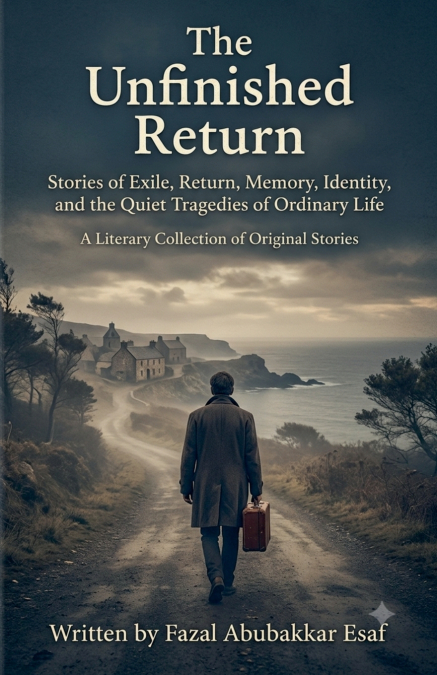
There are places we leave without understanding what we are leaving behind. Only after many years, when unfamiliar streets have become familiar and distant languages have entered our daily conversations, do we begin to recognize the weight of what we once considered ordinary.A childhood village may appear small when remembered from a foreign city. Its narrow pathways, old houses, dusty markets, familiar voices, and evenings beside the river may seem insignificant when compared with the enormous possibilities of the outside world. Yet these ordinary things often become the strongest possessions of a person living far from home.Distance changes more than geography. It changes the way people remember, the way they understand themselves, and the way they interpret the lives they once shared with others.The Unfinished Returns explores this complicated relationship between departure and return. Set within the emotional and cultural landscape of Sudan, its thirty stories examine the experiences of people whose lives are shaped by migration, memory, family obligations, changing traditions, social expectations, and the difficult passage of time.The river occupies an important place throughout this collection. It is more than a geographical presence. It becomes a witness to generations, a companion to forgotten conversations, and a quiet reminder that the natural world continues even when human relationships change.The villages in these stories are neither idealized nor condemned. They contain affection, generosity, jealousy, pride, misunderstanding, social pressure, and the ordinary contradictions of human life. Their inhabitants are not simply representatives of tradition or modernity. They are individuals attempting to make sense of changing circumstances while carrying the expectations of their families and communities.The returning stranger is one of the central figures of this collection. He leaves as someone who believes the world will explain him to himself. He returns carrying experiences that cannot easily be translated into the language of his childhood. The village may recognize his face, but recognition does not necessarily produce understanding.The stories also give space to those who never leave. Their lives are not presented as incomplete versions of the lives of migrants. They possess their own forms of knowledge, disappointment, courage, and emotional complexity.