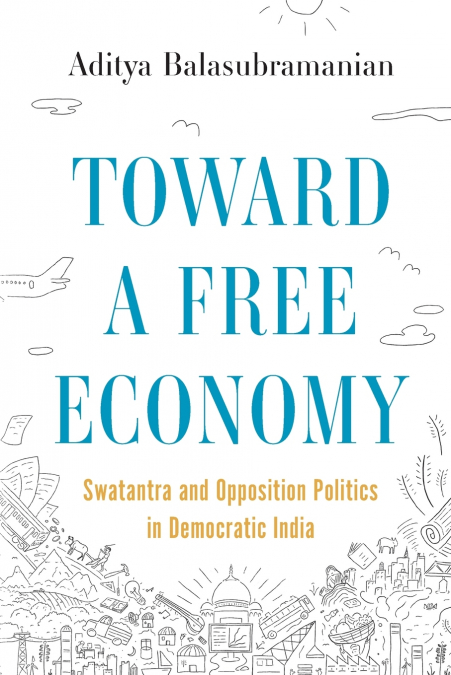
Toward a Free Economy

Toward a Free Economy

Aditya Balasubramanian

35,44 €
IVA incluido
Disponible
Editorial:
Princeton University Press
Año de edición:
2026
Materia
Historia de Asia
ISBN:
9780691249285
35,44 €
IVA incluido
Disponible
Añadir a favoritos

The unknown history of economic conservatism in India after independenceNeoliberalism is routinely characterized as an antidemocratic, expert-driven project aimed at insulating markets from politics, devised in the North Atlantic and projected on the rest of the world. Revising this understanding, Toward a Free Economy shows how economic conservatism emerged and was disseminated in a postcolonial society consistent with the logic of democracy.Twelve years after the British left India, a Swatantra (“Freedom”) Party came to life. It encouraged Indians to break with the Indian National Congress Party, which spearheaded the anticolonial nationalist movement and now dominated Indian democracy. Rejecting Congress’s heavy-industrial developmental state and the accompanying rhetoric of socialism, Swatantra promised “free economy” through its project of opposition politics.As it circulated across various genres, “free economy” took on meanings that varied by region and language, caste and class, and won diverse advocates. These articulations, informed by but distinct from neoliberalism, came chiefly from communities in southern and western India as they embraced new forms of entrepreneurial activity. At their core, they connoted anticommunism, unfettered private economic activity, decentralized development, and the defense of private property.Opposition politics encompassed ideas and practice. Swatantra’s leaders imagined a conservative alternative to a progressive dominant party in a two-party system. They communicated ideas and mobilized people around such issues as inflation, taxation, and property. And they made creative use of India’s institutions to bring checks and balances to the political system.Democracy’s persistence in India is uncommon among postcolonial societies. By excavating a perspective of how Indians made and understood their own democracy and economy, Aditya Balasubramanian broadens our picture of neoliberalism, democracy, and the postcolonial world.

Artículos relacionados

  • Understanding Aikido
    Jan J Sunderlin
    Understanding Aikido: Essential Information and Perceptions (Special Edition) presents an historical, cultural, and philosophical look at the development of the Japanese martial art of Aikido. Sunderlin focuses on the influences brought to bear on Morihei Ueshiba, the founder of Aikido, and the subsequent cultivation of the latter's martial art as a vessel of Budo. The author a...
    Disponible

    63,06 €

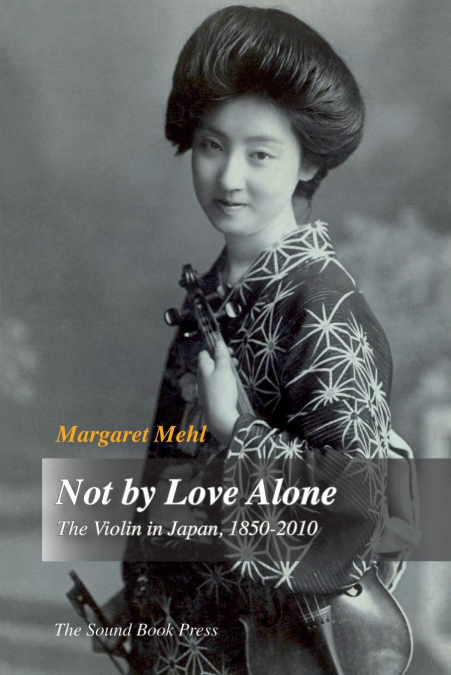
  • Not by Love Alone
    Margaret Mehl
    Suzuki Shin'ichi, the Tokyo String Quartet, Midori - How did Japanese violinists manage to revolutionize violin teaching, win international competitions, conquer Western concert stages, study at world-famous conservatoires and take up positions in leading orchestras and prestigious music faculties? What enabled the Japanese to master Western classical music within a few decades...
    Disponible

    29,32 €

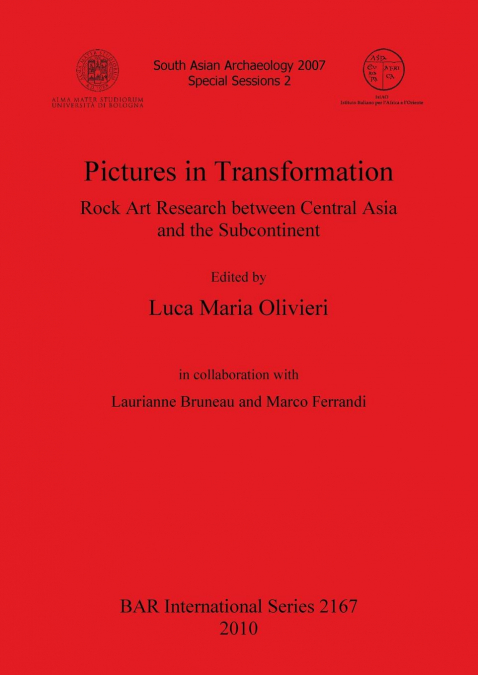
  • Pictures in Transformation
    Luca Maria Olivieri
    ...
    Disponible

    54,79 €

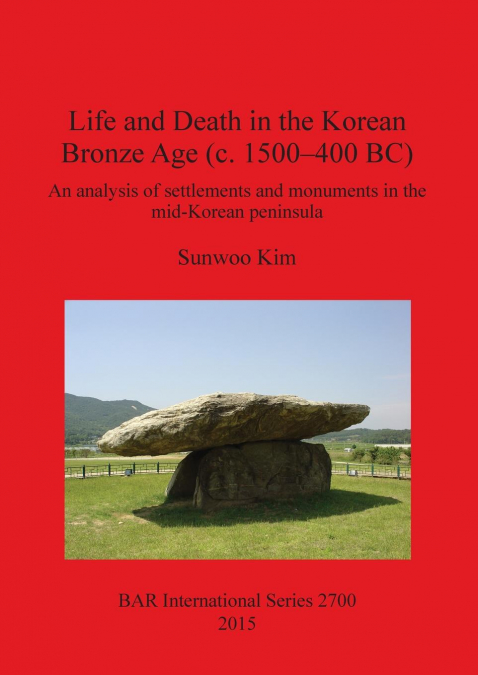
  • Life and Death in the Korean Bronze Age (c. 1500-400 BC)
    Sunwoo Kim
    This research focuses on the Bronze Age in selected areas of Korea; Seoul, Incheon, and Gyeonggi province. Two forms of evidence - settlements and monuments - are taken into account to identify their relationship with landscape and the social changes occurring between ca. 1500 to 400 cal BC. Life and death in the Bronze Age in Korea has not been synthetically investigated befor...
    Disponible

    108,34 €

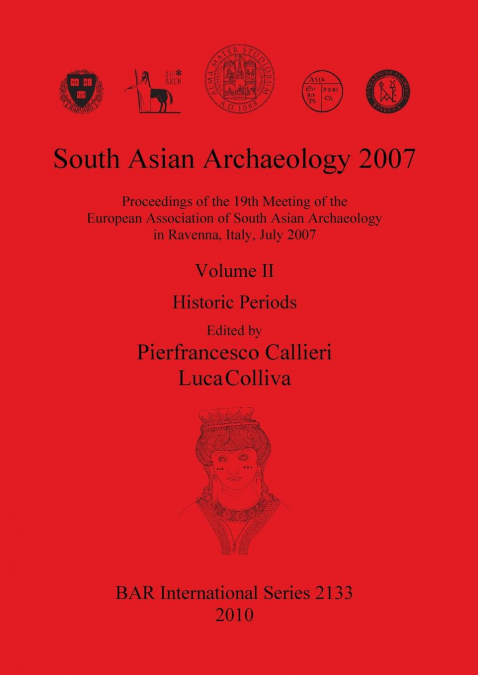
  • South Asian Archaeology 2007
    Proceedings of the 19th Meeting of the European Association of South Asian Archaeology in Ravenna, Italy, July 2007.                     ...
    Disponible

    182,04 €

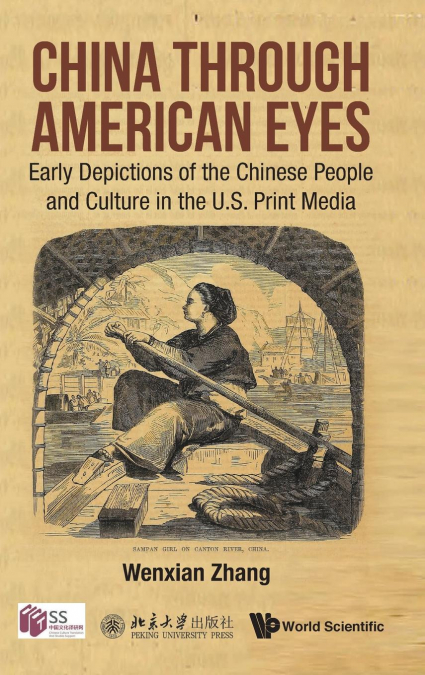
  • CHINA THROUGH AMERICAN EYES
    Wenxian Zhang / ZHANG WENXIAN
    Cultural understanding between the United States and China has been a long and complex process. The period from the mid-nineteenth century to the early twentieth century is not only a critical era in modern Chinese history, but also the peak time of illustrated news reporting in the United States. Besides images from newspapers and journals, this collection also contains pictur...