Sandeep Chavan
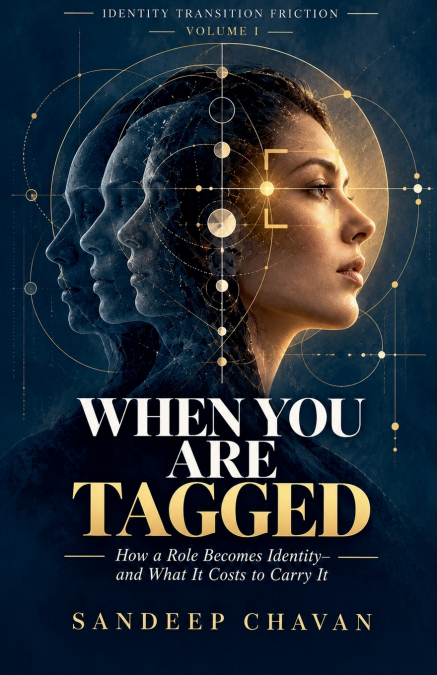
You have changed the way you participate. You are less automatically available. You explain less. Boundaries have become clearer. Authority feels less dependent on performance. You are more willing to pause, admit uncertainty, let others carry responsibility, or leave a problem where it belongs.Yet the world may continue meeting the person it already knows.WHEN THE OLD TAG IS STILL SEEN: How Recognition Lags Behind Inner Change is Volume II of Sandeep Chavan’s Identity Transition Friction: The Selves We Leave Behind series. It begins where When You Are Tagged ends: the carrier has become conscious of an established identity and has started participating differently, but the surrounding field still holds years of earlier evidence.This book introduces and develops Recognition Lag-the persistence of an earlier social interpretation after the person’s relationship with an identity, and therefore some of the signals through which that identity was expressed, has begun to change.The field cannot directly see inner clarity. It reads behaviour.A slower response may look like withdrawal. A boundary may look like rejection. Informality may look like lost authority. Curiosity, hesitation or admitted uncertainty may look like declining competence. Reduced intervention may appear to mean reduced care.But these interpretations do not always arise from hostility. They often arise because social recognition is historical. People learn who we are through repeated encounters, consequences, routines, expectations and patterns of access. Internal understanding can change quickly; public memory usually cannot.Through profession, family, caregiving, leadership, relationships, creative work, entrepreneurship and public identity, Chavan examines what happens when present participation begins contradicting stored recognition. He explores how familiar signals acquire meaning, why explanation alone cannot instantly update a field, why different relationships adapt at different speeds, and why behavioural change, relational adaptation, public recognition and consequence operate on different clocks.The book does not treat earlier identities as false selves that must be rejected. Nor does it prescribe confrontation, withdrawal or exit. Instead, it asks a more difficult question: How can a person continue participating coherently while the surrounding world is still learning that the old tag no longer predicts everything?The answer is neither to return automatically to the earlier identity nor to demand that years of accumulated social evidence disappear overnight.The carrier has moved.The field still has a history.Between them lies recognition lag.