Fazal Abubakkar Esaf
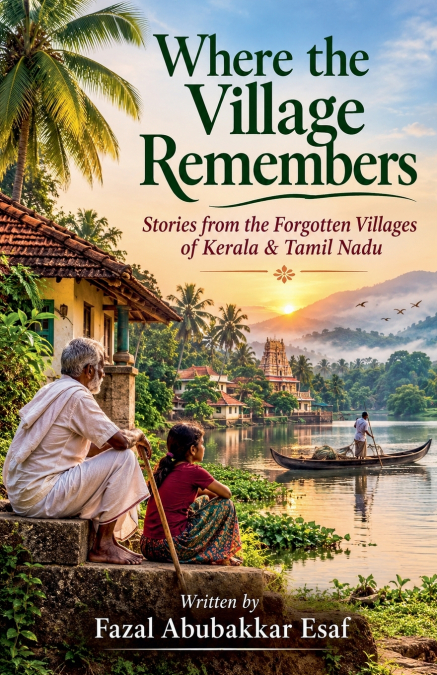
There are places that disappear from the attention of the world without ever disappearing from the lives of the people who inhabit them.They are villages beyond the main roads, settlements hidden behind hills, coastal communities waiting for the next fishing season, and farming families whose relationship with the land stretches across generations. Their names may rarely appear in newspapers. Their struggles may never reach the offices where decisions are made. Yet their lives contain histories as complicated, meaningful and extraordinary as those of the largest cities.Where the Village Remember was conceived from an interest in these overlooked landscapes and the people who give them meaning.Kerala and Tamil Nadu possess extraordinary geographical and cultural diversity. Their rivers, mountains, forests, coconut groves, agricultural fields, coastal settlements and traditional houses form a landscape of remarkable beauty. But beauty is only one part of their story. Behind the green hills and peaceful backwaters are questions of land ownership, caste, poverty, migration, gender inequality, ecological change and the struggle to preserve inherited ways of life.A village can be beautiful and unequal at the same time. A river can nourish one community while becoming a boundary for another. An ancestral house can represent belonging to one person and confinement to someone else. A road can bring opportunity but also displacement. Education can open a door, while social prejudice continues to determine who is allowed to walk through it.