Md. Uzzal Molla
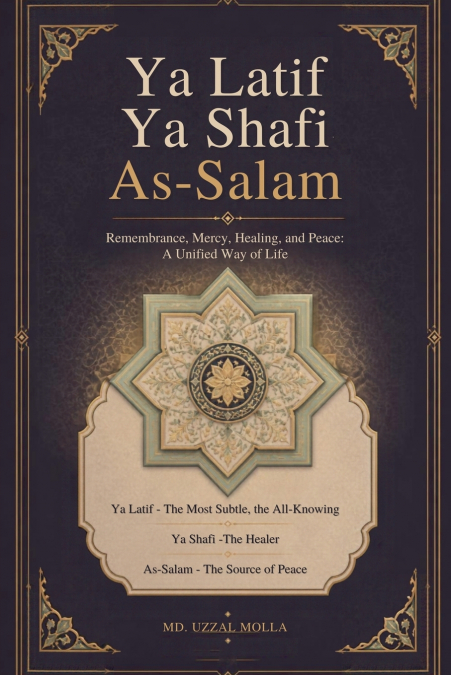
Ya Latif, Ya Shafi, As-Salam: Remembrance, Mercy, Healing, and Peace: A Unified Way of Life is a spiritual-philosophical exploration of three profound Divine Names of Allah and the transformation they can inspire in human consciousness, character, responsibility, and relationships.The book begins with Ya Latif - The Most Subtle, the All-Knowing, reflecting on Allah’s subtle knowledge, gentle mercy, and awareness of what lies beyond ordinary human perception. It considers the limitations of human understanding and invites the reader toward humility, attentiveness, trust, and compassionate action. Divine subtlety is not presented as a denial of suffering; rather, it becomes a foundation for recognizing human limitations while continuing to act responsibly within them.The journey then moves to Ya Shafi - The Healer, exploring healing as restoration in the face of human vulnerability. Healing is considered not only in relation to the physical body, but also in psychological, relational, moral, and spiritual dimensions. The book emphasizes that trust in Allah does not remove human responsibility. Seeking appropriate knowledge, treatment, counsel, and practical means can coexist with reliance upon Allah as the ultimate source of healing.The third movement is As-Salam - The Source of Peace. Here, peace is examined as something deeper than the mere absence of conflict. It encompasses inner tranquility, human dignity, justice, restraint, reconciliation, safety, and responsible relationships. The book explores how remembrance can influence the way individuals exercise power, respond to disagreement, confront wrongdoing, forgive, and seek peace without abandoning justice.At the heart of the work is the conceptual progression:Ya Latif → Ya Shafi → As-SalamMercy → Healing → PeaceThis progression is developed further through a transformative pathway:Remembrance → Awareness → Intention → Character → Responsible Action → Relationship → PeaceThe book does not present this framework as a revealed theological equation. Instead, it offers a spiritual and philosophical reflection grounded in Islamic concepts while distinguishing Qur’anic revelation, authentic Prophetic teachings, established scholarship, philosophical interpretation, and personal contemplation.Throughout the work, remembrance is treated as more than verbal repetition. It can become awareness; awareness can shape intention; intention can influence character; character can guide action; and responsible action can transform relationships. In this sense, remembrance becomes a lived orientation toward Allah and toward humanity.The book also examines the relationship between mercy and justice, healing and truth, peace and responsibility. It argues that mercy should not become moral relativism, healing should not become denial of suffering, forgiveness should not require denial of wrongdoing, and peace should not be confused with silence in the presence of injustice.Written for readers interested in Islamic spirituality, Qur’anic reflection, human transformation, moral responsibility, healing, peace, and the relationship between inner consciousness and outward conduct, Ya Latif, Ya Shafi, As-Salam invites the reader into a journey from remembrance toward a more compassionate, responsible, and peaceful way of living.Its ultimate direction is simple:Remember Allah. Receive mercy with humility. Seek healing with responsibility. Protect dignity. Restrain harm. Pursue reconciliation where possible. Seek peace.