Mark E. King
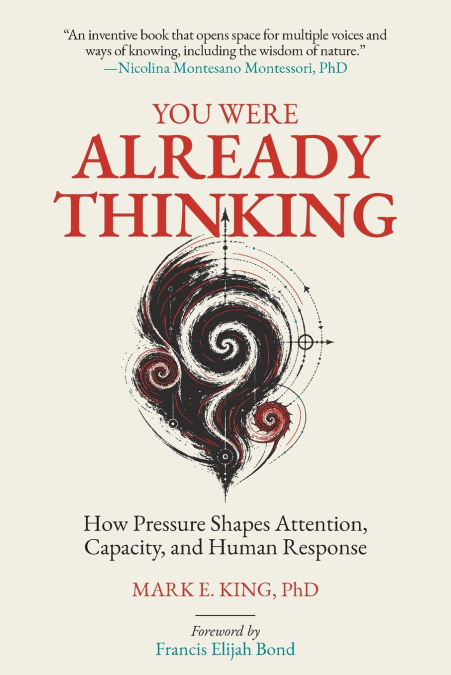
You are not failing to respond; you may be carrying conditions no one can see.A threshold text for adults whose visible functioning obscures the conditions, effort, and time required to think, respond, repair, and return under pressure.Thinking often begins before it becomes visible. A pause may contain formation. A delay may contain care. Silence may hold unfinished movement. A later answer may still belong to the original question.You Were Already Thinking is for anyone who has felt scattered, saturated, delayed, overextended, or unable to return after the day has become too much. It is for the person who appears capable while privately carrying the preparation, monitoring, memory, bodily strain, and recovery that make visible performance possible. It is also for parents, partners, teachers, clinicians, colleagues, and leaders who must respond to another person without mistaking the first visible moment for the whole event.This is not a productivity book. It does not ask you to become more resilient, more disciplined, or more acceptable to systems that keep asking too much. It does not romanticise delay, excuse harm, or assume that every silence conceals a meaningful answer. It begins somewhere else: with return.Return is the movement through which something forming within a person becomes available-in language, action, decision, refusal, repair, changed participation, or departure. When return becomes difficult, thinking grows expensive. Attention fragments. Signals compete. Tasks remain open. Transitions fail to land. The body continues carrying what the calendar says is over. Competence can conceal its cost, and one successful performance can become the reason support is withdrawn.Drawing together body, relationship, task, timing, history, environment, power, and consequence, Mark E. King offers a practical language for reading what has happened without reducing a person to the response that became visible. Seventeen core constructs-including latency, closure debt, overrun, saturation, fragmentation, the performance mask, tempo, repair, field-reading, and the minimum viable day-show how pressure changes access to thought, coordination, choice, and return.Human Field Plates and ordinary-life encounters make this architecture visible across conversations, households, schools, workplaces, institutions, grief, conflict, and care. The accompanying guides help readers distinguish observation from interpretation, locate what remains unfinished, reduce demand without issuing a verdict, create usable thresholds, preserve a return path, and choose the next responsible action.The central claim is simple but demanding: what appeared was real, and it was not the whole field. What looked like absence may have been cognition under load. What looked like refusal may have involved a broken crossing. What looked like competence may have depended on invisible preparation and later collapse. Context does not erase consequence, but consequence does not justify reducing a person to one event.You Were Already Thinking keeps dignity and responsibility in the same account. It makes room for safety, boundaries, evidence, support, repair, uncertainty, and revision. It asks not only what happened, but what shaped the route, who carried the effect, what remains answerable, and what conditions could make the next movement possible.For the person who functions all day and collapses when the room goes quiet.For the answer that arrived after the room had stopped listening.For the mind still working beneath the pressure.For the return that was already trying to happen.You do not have to understand everything.You have to be able to return.