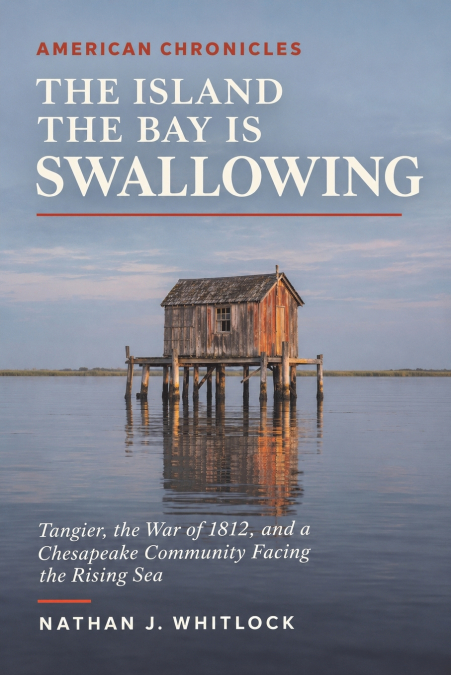
Nathan J. Whitlock
Tangier Island sits in the middle of the Chesapeake Bay, a little more than a square mile of marsh and three narrow sandy ridges where a town of a few hundred people still makes its living on the water. Scientists who compared maps from 1850 to 2013 found that about two thirds of the island group’s land had gone into the bay. Many islanders, including their longtime mayor, have said the danger is erosion they can see, not a rising sea. This book tells the island’s whole story, from the first English record in 1608 to the debates of today. In 1814 the Royal Navy built Fort Albion on Tangier’s southern tip and used it as its base in the Chesapeake. Hundreds of people who escaped slavery in Virginia and Maryland reached freedom there, and men among them trained as Colonial Marines, fought at Bladensburg, and entered Washington with the British army. A Methodist preacher named Joshua Thomas later said he warned the troops, before they sailed for Baltimore, that they would fail. The fort burned in 1815, and a hurricane erased what was left. Built on National Register documentation, the parson’s own recollections, peer-reviewed studies, and published reporting, and clear about every point where sources disagree, this is a careful, respectful history of a place that has been changing shape for as long as anyone has written about it.