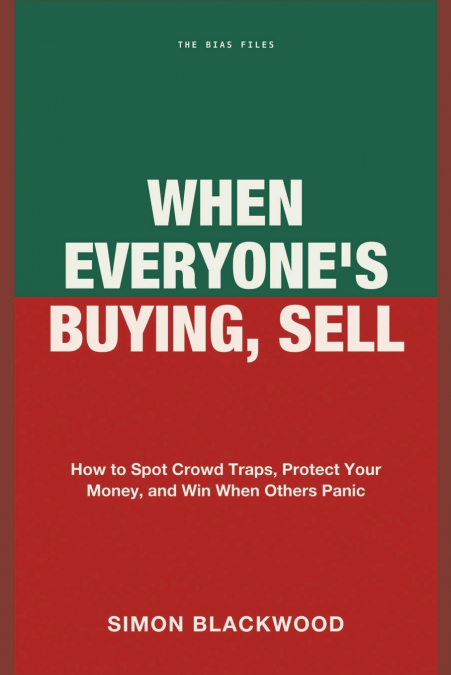
Simon Blackwood
The choice you think you’re making based on the facts is often being made by the sentence that presented them,and most people never notice the substitution. Part of The Bias Files, Simon Blackwood’s insightful bookexplores how identical information, described in two equally accurate ways, produces two differentdecisions-and why the wording, not the underlying reality, is frequently in control.When a fact moves from raw data to spoken or written language, it stops being neutral and becomes a frame thatquietly directs your response. Words Are Weapons is not a logic primer, a rhetoric handbook, or a persuasionmanual. Instead, it reveals the specific, documented language patterns that alter your choices in grocery aisles,loan offices, hospital consultations, and ballot boxes-often without you realizing a frame was ever applied.Through real studies and everyday scenarios, Blackwood unpacks the mechanics of framing across ninedomains:- The Same Fact, Dressed Twice: Why 200 people saved and 400 people dead describe identical outcomesyet produce opposite preferences, and how this mechanism operates far beyond hypothetical scenarios.- The Lean Illusion: How ground beef labeled '75% lean' tastes better and sells faster than the identicalproduct labeled '25% fat,' even when both numbers appear on the same package.- The Discount That Isn’t: Why a credit-card 'surcharge' feels like a penalty while a 'cash discount' feelslike a reward, though both describe the same price gap.- The Survival Frame: How presenting a medical procedure’s outcomes as '90% survival' versus '10%mortality' shifts patient and physician preferences for the identical statistical risk.- The Reference Point: Why the baseline you’re measuring from-gain or loss, saved or spent, kept or...